By: Nana
Appiah Acquaye
The United Nations has
called for artificial intelligence to be deployed in ways that strengthen
education systems, improve learning outcomes and expand opportunities for
learners, rather than deepen existing inequalities.
The call was made at
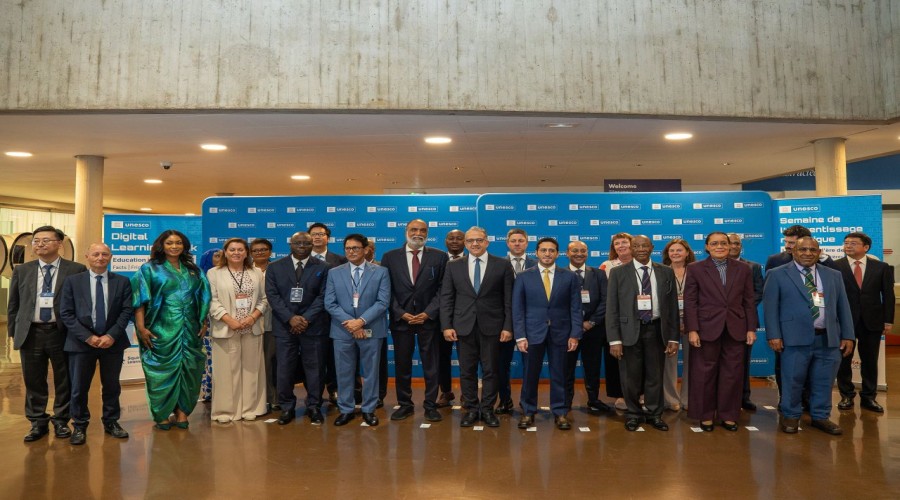
UNESCO’s Digital Learning Week in Paris, where UN Tech Envoy Amandeep Gill
joined UNESCO Director-General Khaled El-Enany Ezz, UNESCO Assistant
Director-General for Education Qun Chen and education ministers from more than
30 countries to discuss the implications of AI for the future of education.
Gill said the success of
artificial intelligence should ultimately be measured by its impact on people’s
lives, the strength of education systems and its ability to create a more level
playing field for the global majority.
The discussions considered
both the opportunities and risks associated with the rapid integration of AI
into education, drawing on findings from the Independent International
Scientific Panel on AI and research commissioned by UNESCO.
Participants examined the
conditions required to ensure that AI benefits learners across different
regions and education systems, with particular emphasis on institutional
preparedness, evidence-based approaches and appropriate safeguards.
The discussions also
highlighted the need for education authorities to develop the capacity to
assess and deploy AI tools responsibly while ensuring that technology supports
rather than undermines the public purpose of education.
Gill welcomed the adoption
of the Ministerial Statement, “Sustaining education as a common good in the age
of AI,” which reflects a shared commitment among participating countries to
ensuring that artificial intelligence supports education as a public good.
The statement reinforces the
importance of using AI to advance learning opportunities while maintaining
equity, inclusion and public accountability.
The Paris discussions come
as governments and education institutions worldwide consider how rapidly
advancing AI technologies should be incorporated into teaching, learning and
education management.