By: Nana
Appiah Acquaye
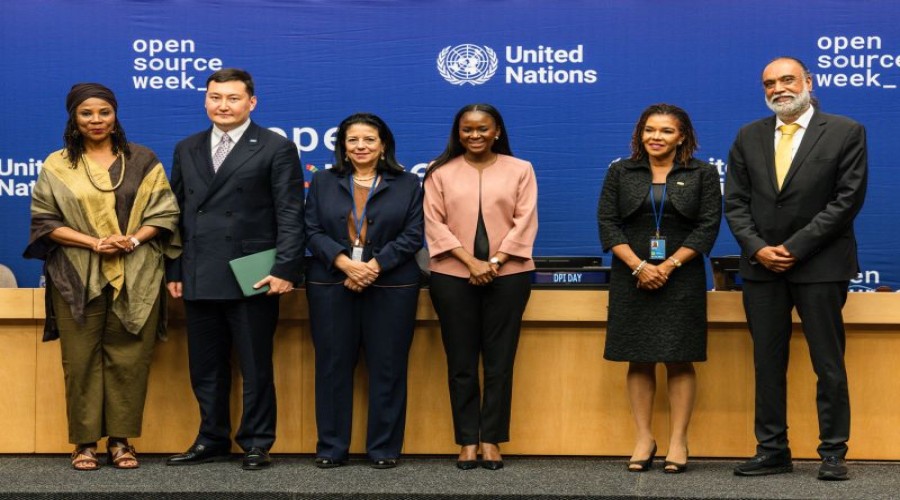
The United Nations Open
Source Week has continued with a focus on Digital Public Infrastructure (DPI),
bringing together ministers, development partners, civil society actors and
technology practitioners to examine how digital systems shape access to public
services and governance.
On Day 3 of the event,
themed DPI Day, discussions centred on the role of digital infrastructure in
determining how citizens access essential services, how such systems are
governed, and how resilience is maintained when digital platforms face
operational or security challenges.
Participants explored a
range of thematic areas including the digitalisation of cross-border trade,
expansion of financial inclusion, safeguards for digital public infrastructure,
and the long-term sustainability of DPI systems supporting health, education
and scientific research.
A dedicated session also
addressed gender inclusion in digital government systems, with a focus on the
role of women in GovTech and strategies for closing persistent gender gaps in
digital public service delivery.
The discussions moved beyond
policy frameworks to practical implementation, with stakeholders emphasizing
the need for scalable, secure and inclusive digital systems that can support
national development priorities and regional integration.
The event is co-organized by
the United Nations Office for Digital and Emerging Technologies and the United
Nations Office of Information and Communications Technology.
Recordings of the sessions
have been made available online for public access as part of ongoing
knowledge-sharing efforts under the UN Open Source Week programme.