COP31 Presidency and IEA launch new strategic partnership at high-level dialogue in Paris
Date: 2026-04-30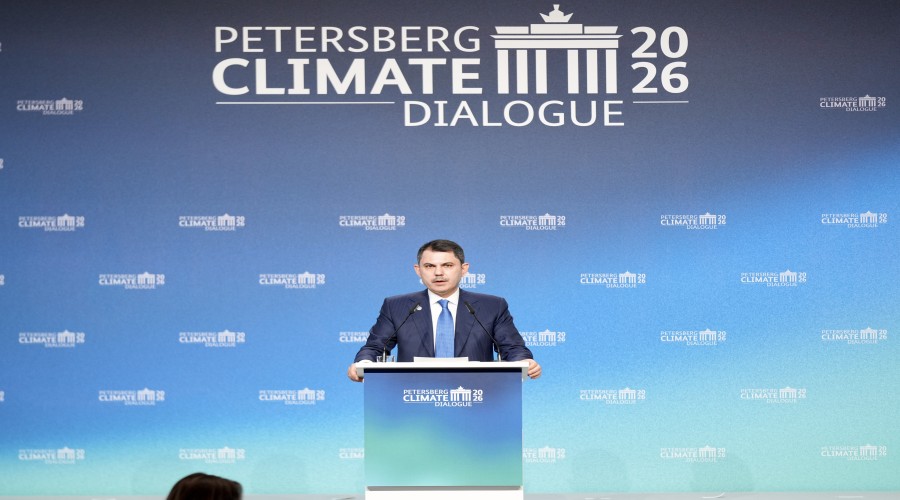
By: Nana Appiah Acquaye
Türkiye’s COP31 Presidency and the International Energy Agency (IEA) has announced a new strategic partnership to deliver concrete solutions to drive the energy transition. The partnership will deliver new data, analysis and policy advice ahead of November’s COP31 summit, including renewable energy deployment, green industrialization and clean cooking.
COP31
President-Designate H.E. Murat Kurum said: “I am delighted to announce a
strategic partnership between COP31 and the IEA. Combining the IEA’s
unparalleled technical expertise with the unique convening power and political
leadership of COP, we will deliver concrete solutions and help build agreement
on energy systems fit for the future.”

The
partnership was launched at a High-Level Dialogue at the IEA headquarters in
Paris, attended by over 50 governments, former COP Presidencies, and private
sector and civil society leaders. The meeting was chaired by IEA Executive
Director Fatih Birol.
H.E.
Kurum, Türkiye’s Minister of Environment, Urbanization and Climate Change,
confirmed that one of the partnership’s first tasks would be to provide new
data and analysis on the impact of waste and recycling measures on climate
change.
Speaking
at the event, H.E. Kurum also committed to placing access to clean cooking “at
the centre of the global agenda” this year, working with partners to drive
funding towards this critical issue. Over 2.3 billion people, mainly in Africa
and Developing Asia, use solid fuel for cooking, contributing to millions of
deaths every year.
He
also highlighted the disastrous impacts of the ongoing energy crisis on this
issue. He warned that the crisis threatens to throw the progress the world has
made on clean cooking into reverse, with energy prices and insecurity forcing
families to revert to burning wood, coal and other dirty fuels. This is an
issue with cross-cutting impacts across the energy transition, social justice
and health.

Now,
he is issuing a rallying cry to donors, arguing that the energy crisis,
combined with a drop of international aid by almost a quarter last year (OECD),
is creating a “twin crisis that is putting immense pressure on vulnerable
families across the developing world.”
He
argues that cuts to climate finance which impact mitigation and adaption
efforts in developing countries are short-sighted and against the spirit of
deals struck by the multilateral community, and says that the “COP31 Presidency
will hold donors to account for the promises they made under the COP29 Baku
Finance Goal.”
“Clean-cooking
emissions are some of the cheapest to chase, and offer crucial co-benefits to
vulnerable families across the world. This is an opportunity we cannot afford
to miss.”