By: Nana
Appiah Acquaye
Egypt’s Minister of
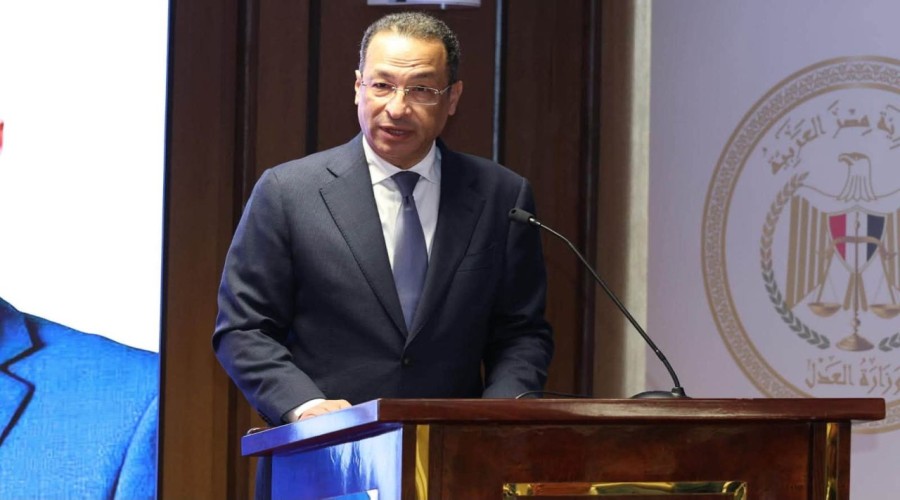
Communications and Information Technology, Eng. Raafat Hindi, has attended the
closing ceremony of the 25th Egyptian Collegiate Programming Contest (ECPC),
which brought together approximately 8,000 students from 86 universities and institutes.
The competition, hosted by
the Arab Academy for Science, Technology and Maritime Transport at its main
campus in Abu Qir, Alexandria, marked the 25th anniversary of the national
programming championship and continues to serve as Egypt’s qualifying platform
for regional and international collegiate programming competitions.
The closing ceremony was
also attended by Alexandria Governor Eng. Ayman Attia and President of the Arab
Academy for Science, Technology and Maritime Transport Dr. Ismail Abdel
Ghaffar.
Addressing participants,
Hindi said the ECPC had played a significant role over the past 25 years in
identifying talented programmers, developing technical capabilities and
preparing generations of young Egyptians who have contributed to the country’s
growing position in the global technology sector.
He said the competition goes
beyond testing programming skills, requiring participants to demonstrate
critical thinking, teamwork, task allocation, conflict management and
decision-making under pressure.
Hindi noted that Egypt’s
growing position in outsourcing and digital services exports has been supported
by its young and skilled workforce, strategic location and linguistic and
cultural diversity. He said the government’s ambitions now extend beyond
expanding the outsourcing industry to positioning Egypt higher in the global
technology value chain, particularly as artificial intelligence reshapes jobs
and industries.
He said the Ministry of
Communications and Information Technology is also working to strengthen Egypt’s
capabilities in developing artificial intelligence solutions and support young
people and startups in creating locally developed technologies and intellectual
property with global potential.
As part of those efforts,
Hindi highlighted the development of “Karnak”, described by the ministry as a
large-scale national Arabic language model developed by Egyptian engineers and
researchers at the Applied Innovation Center. He said the model had achieved
leading positions among Arabic language models in the 30-billion and 40-billion
parameter categories on international evaluation platforms.
Hindi used the development
of Karnak to encourage the participating students, noting that the engineers
and researchers behind the model began their careers by learning algorithms,
experimenting, making mistakes and improving their work before developing
technology capable of understanding Arabic language and cultural context.
He said Karnak could provide
a foundation for applications in areas including education, legal services,
government services, translation and language learning.
Alexandria Governor Ayman
Attia said the participation of about 8,000 students from 86 universities and
institutes demonstrated the strength of Egypt’s young talent in programming,
algorithms and problem-solving. He said the competition reflected the
importance attached to digital transformation, technological development and
human capital.
Dr. Ismail Abdel Ghaffar
said the ECPC had evolved over 25 years into a national system for identifying
and developing programming talent, providing a pathway for Egyptian students
from national competition to Arab and African contests and ultimately the World
Collegiate Programming Contest.
The ECPC serves as Egypt’s
official qualifying route to the Arab and African Collegiate Programming
Contest and subsequently the global competition.
The championship forms part
of the International Collegiate Programming Contest ecosystem, which brings
together more than 60,000 students from more than 3,000 universities across
over 110 countries each year. The Arab and African regional competitions provide
additional platforms for students to advance their programming and
problem-solving skills.