Kenya’s Technology Envoy calls for digital commons to safeguard sovereignty in age of intelligence
Date: 2025-12-18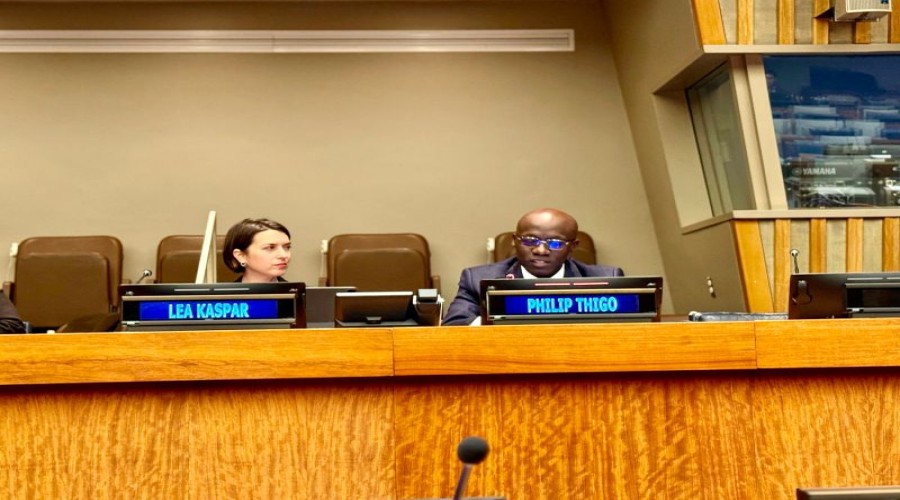
By: Nana Appiah Acquaye
Kenya’s
Special Envoy on Technology, Ambassador Philip Thigo, has called for renewed
global commitment to building and sustaining digital commons as strategic
public-interest infrastructure, warning that intelligence, data, and digital
systems must not be outsourced in the emerging age of artificial intelligence.
Ambassador
Thigo made the remarks while speaking at a United Nations side event titled “Building
the Commons: Creating and Maintaining Digital Public Goods,” moderated by
the Wikimedia Foundation and attended by representatives from Estonia, France,
civil society organisations, and members of the global digital policy
community.

He
noted that as the world transitions from the Information Society to the Age of
Intelligence, digital public goods and digital commons must be understood not
merely as instruments of openness, but as foundations for agency, resilience,
and digital sovereignty. According to him, equitable digital transformation
requires enabling countries—particularly those in the Global South—to become
creators, stewards, and governors of technology rather than passive users of
imported systems.
Drawing
from Kenya’s experience as Africa’s “Silicon Savannah,” Ambassador Thigo
highlighted that openness and sovereignty are not mutually exclusive, but can
scale together when supported by strong governance and multistakeholder
stewardship. He emphasized that well-governed digital public goods form the
basis of what he described as digital public intelligence—public-interest
artificial intelligence and data systems that are accountable, transparent, and
locally governable.
Ambassador
Thigo further stressed that no individual, institution, or country should
relinquish control over its intelligence infrastructure in the new digital era.
He argued that inclusive and sustainable digital cooperation depends on shared
ownership of digital systems that serve people and planet alike.

As
global discussions around WSIS+20 and the Global Digital Compact continue to
shape the future of international digital cooperation, he called for digital
commons to be treated as long-term, strategic public infrastructure. He
concluded that sustained investment, inclusive participation, and collective
stewardship are essential to ensuring that digital transformation delivers
shared value and strengthens global digital equity.
Leave Your Comments
Trending News