By: Kanto
Kai Okanta
Kenya is advancing the AI
Middle Powers (AIM) initiative as a framework for strengthening technological
autonomy and trusted international cooperation in the development, deployment
and governance of artificial intelligence.
Kenya’s Special Envoy on
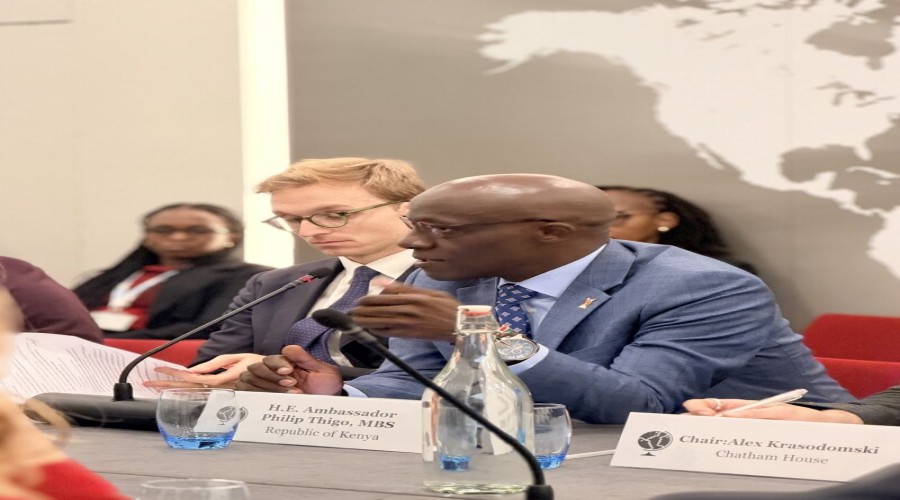
Technology, Ambassador Philip Thigo, outlined the initiative during a
discussion at Chatham House in London, where he joined international colleagues
to examine the role of AI middle powers in shaping the global artificial intelligence
ecosystem.
Thigo said that as AI
increasingly shapes economic competitiveness, national security and development
outcomes, countries must have the agency, capacity and capability to make
independent decisions about their technological futures.
He described the AIM
initiative as “a values-aligned plurilateral effort grounded in
multilateralism, with strategic autonomy as its objective and shared
sovereignty as its organising principle.”
According to Thigo, shared
sovereignty is anchored in trusted interdependence, recognising the
opportunities for countries to collaborate on financing, infrastructure and
capacity while mobilising investments, diversifying technology supply chains
and strengthening their agency in AI development, deployment and governance.
He emphasised that
international cooperation must deliver tangible economic and social benefits,
particularly for countries of the Global Majority.
“Our collective ambition
must translate into jobs, productivity, economic opportunities, improved public
services and meaningful development outcomes, particularly for countries of the
Global Majority,” he said.
Thigo also expressed
appreciation to Tighisti Amare, Alex Krasodomski and the wider Chatham House
team, alongside partners at the UK Foreign, Commonwealth & Development
Office (FCDO) and Sheiley of the Open Society Foundations, for their
contributions to the discussion.