By: Nana
Appiah Acquaye
African Continental Free
Trade Area (AfCFTA) Secretary-General Wamkele Mene has identified continental
value chains, green industrialisation and improved access to trade finance for
small businesses as key priorities for translating Africa’s economic potential
into investment, industrial development and job creation.
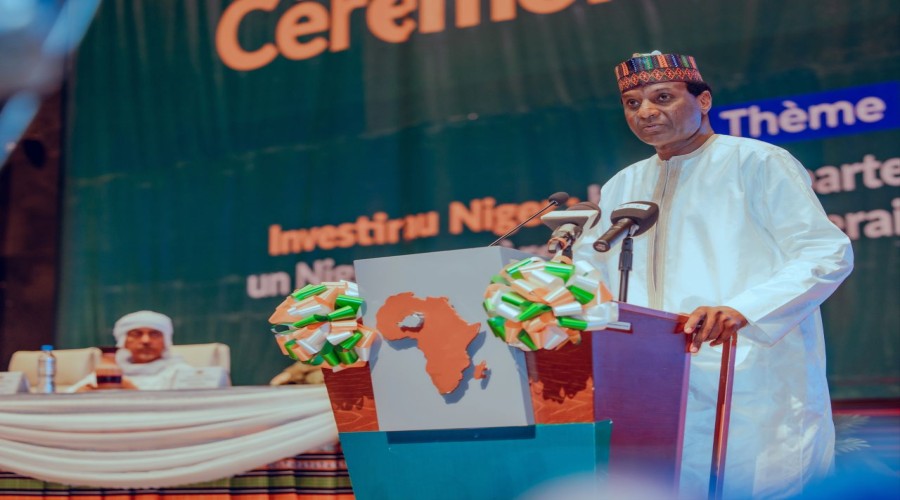
Speaking at the Cameroon
Investment Forum in Yaoundé, Mene said Africa, with approximately 1.4 billion
people and a combined Gross Domestic Product (GDP) of US$3.4 trillion, has
considerable market potential, but economic fragmentation continues to constrain
the continent’s ability to turn that scale into shared prosperity.
He said the AfCFTA is
designed to address this challenge by creating a single continental market and
reducing barriers to trade among African countries.
Providing an update on
implementation, Mene said 50 of the African Union’s 55 Member States have
ratified the Agreement, while negotiations on the mandated protocols, including
investment, digital trade, and women and youth in trade, have been concluded.
Preferential trading began
under the Guided Trade Initiative in October 2022, with Cameroon among the
participating pilot countries. Currently, 27 countries have gazetted their
tariff schedules, allowing them to apply the preferential trading regime, while
a number of countries are already trading actively under AfCFTA rules.
However, Mene acknowledged
that significant challenges remain, including infrastructure gaps, high
transport and logistics costs, customs procedures that are still being aligned
with the Agreement, and the high cost of trade finance.
“Without political will, you
will not be able to move,” he said, emphasising the importance of political
commitment in advancing the continental trade agenda.
On industrial development,
Mene identified the building of continental value chains as a major priority,
highlighting opportunities for African countries to participate in regional
production networks rather than focusing exclusively on manufacturing finished
products.
Using the automotive
industry as an example, he noted that a vehicle contains more than 30,000
components, creating opportunities for different African economies to
contribute parts, materials and services to the production process.
He also pointed to the
development of local refining capacity, including in Nigeria, as an example of
investments that could reduce dependence on imported finished products.
Green industrialisation was
identified as another priority, with initiatives such as the Africa Green
Industrialization Initiative and cooperation with African financial
institutions seeking to connect clean energy, industrial production and trade.
Mene further stressed the
need to make the continental market more accessible to small and medium-sized
enterprises (SMEs), particularly by addressing the high cost of trade finance,
which can reach between 18 and 20 per cent for some businesses.
He explained that the AfCFTA
Secretariat is not a financing institution but plays a role in helping
businesses navigate trade barriers, identify markets and suppliers, and engage
with institutions responsible for facilitating trade.
Digital payment solutions,
including the Pan-African Payment and Settlement System (PAPSS), were also
identified as important to improving cross-border trade and supporting the
implementation of the single market.