By: Nana
Appiah Acquaye
Egypt is planning to deploy
artificial intelligence (AI) in economic management and public finance, with an
initial focus on forecasting government revenues, monitoring macroeconomic
indicators and analysing public spending to improve resource allocation and
decision-making.
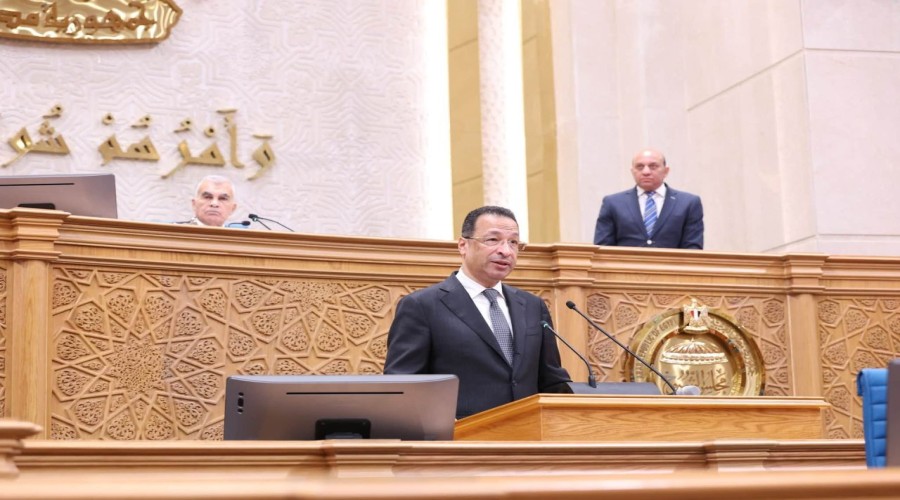
Minister of Communications
and Information Technology, Engineer Raafat Hindi, outlined the plans during a
general session of the Egyptian Senate, chaired by Counselor Essam Farid, which
examined a study titled “Artificial Intelligence as a Strategic Tool in
Managing the Economy and Public Finance in Egypt”, presented by MP Ahmed Abu
Hashima.
Hindi said the government
intends to move beyond digitising transactions and delivering electronic
services towards using technology to strengthen the analytical and predictive
capabilities of state institutions and improve decision-making.
He explained that the
Ministry of Communications and Information Technology supports the study's
central objective of advancing proactive economic management based on advanced
data and analytics to improve the allocation of state resources and maximise the
developmental returns from public spending.
The Ministry has proposed
three priority AI applications to support this transition: developing models to
forecast public revenues and produce more accurate estimates; real-time
forecasting of macroeconomic indicators to identify economic trends early; and
analysing deviations in public spending to strengthen monitoring and improve
resource efficiency.
Hindi said the applications
would initially be implemented on an experimental and phased basis in
cooperation with the Ministries of Finance and Planning and other relevant
authorities. Their results and economic feasibility would be assessed before
any wider deployment, alongside an examination of the institutional,
legislative and regulatory requirements.
He also stressed the
importance of maintaining state sovereignty over data, ensuring data accuracy
and circulation, and making AI models neutral and their outputs understandable
for review and interpretation. He added that citizens' rights must be protected,
emphasising that artificial intelligence should enhance human decision-making
rather than replace the responsibility of officials under the Constitution and
the law.
The Minister outlined
Egypt's efforts to develop its national AI capabilities, which began in 2019
with the establishment of the National Council for Artificial Intelligence.
This was followed by the creation of the Ministry's Applied Innovation Center in
2020 and the launch of the first edition of the National AI Strategy in 2021.
The initial strategy focused
on integrating AI into government operations, supporting development goals,
building human capacities and strengthening Egypt's participation in
international discussions on the technology. According to Hindi, its
implementation helped establish a foundation of Egyptian expertise, develop
technological solutions addressing local development challenges and introduce
principles for the responsible use of AI.
Egypt subsequently launched
the second edition of its National Artificial Intelligence Strategy for
2025–2030, which seeks to expand the adoption of AI and develop a domestic AI
industry. The strategy is built around six pillars: governance, data, infrastructure,
technology and applications, ecosystem development, and capacity building.
Through the National AI
Council, the Ministry is working with other government institutions to identify
sector-specific priorities and develop appropriate applications. The Council's
scope has also been extended to include quantum computing and other emerging
technologies.
Hindi said these efforts had
contributed to Egypt advancing 59 places in the Government AI Readiness Index
since 2019, including 14 positions in the past year. Egypt ranked first in
Africa, third in the Arab world and 51st globally in the 2025 index.
The Minister also
highlighted the work of the Applied Innovation Center in developing AI
solutions using Egyptian expertise to address challenges across different
sectors while taking account of the country's social, cultural and national
identity.
Among the applications
developed are tools for the early detection of diabetic retinopathy and breast
cancer, as well as judicial applications that automatically generate minutes by
converting speech into written text and provide an intelligent judicial assistant.
Other solutions include the
'Siya' applications supporting education, the 'Languages' application for
English language learning, and the 'Balmasri' application for speech
recognition and machine translation. The Ministry has also developed 'Karnak',
an Egyptian language model intended to strengthen national capabilities in
building AI models and provide researchers, innovators and Egyptian companies
with a foundation for developing further applications.
Beyond application
development, the government is working to attract investment in data centres
and advanced computing capabilities, support startups, expand specialist
training and improve public awareness and use of AI technologies.
The Ministry aims to train
more than 30,000 specialists in artificial intelligence and support the
development of at least 250 startups in the sector by 2030.
On governance, Hindi cited
the Egyptian Charter for Responsible AI, the National Framework Guide for AI
Governance and the Guiding Principles for Generative Artificial Intelligence as
measures introduced to promote responsible adoption. Egypt is also participating
in regional and international discussions on AI governance, including efforts
to shape Arab and African approaches.
He said existing digital
infrastructure would provide a foundation for implementing the Senate study's
recommendations. These include the government digital converter, which connects
105 government entities and 100 national databases, alongside the government
financial information management system and planning information systems.
The Minister stressed the
importance of maximising the benefits of these existing investments and
strengthening their analytical and technological capabilities to improve
institutional integration and the efficiency of public resource allocation.
He also welcomed the
alignment between recommendations from the Ministry's working team and those of
the Senate's joint committee, particularly on strengthening the National
Council for Artificial Intelligence, making better use of existing digital
systems, adopting gradual implementation, investing in human capacity
development and measuring the economic feasibility of proposed applications.
Looking ahead, Hindi said
Egypt's next phase of AI development would go beyond building technological
applications towards establishing an institutional culture that recognises data
as a national asset and uses its analytical potential to support economic
development and improve public services, investment and economic policies.
He added that preparing
Egyptian economic sectors to absorb AI technologies would be essential to
increasing productivity, strengthening competitiveness and developing the
workforce needed to contribute to the production and advancement of the
technology.
The Ministry of
Communications and Information Technology, he said, would continue working with
the Senate and other state institutions, providing technical expertise and
capabilities to translate the study's recommendations into practical results.