By: Van
Soul Addey
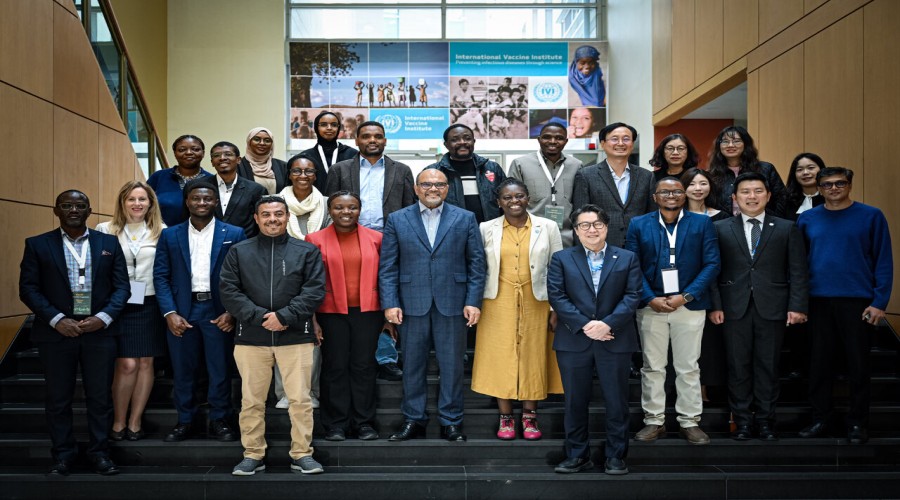
A delegation of 12 African
scientists and Technology Transfer Officers from the DELTAS Africa and Grand
Challenges Africa programmes has participated in an innovation immersion
programme hosted by the Korea Advanced Institute of Science and Technology (KAIST)
in South Korea, exploring approaches to strengthening research
commercialisation across African institutions.
The programme provided the
delegates with an opportunity to examine the institutional models, partnerships
and enabling environments that have helped position South Korea as a global
innovation powerhouse, and consider how similar approaches could be adapted to
support Africa’s research and innovation ecosystems.
During the programme, the
delegation engaged with former South Korean Foreign Minister Jin Park, who is
now an Advisor to KAIST’s Science Diplomacy Department. The discussions offered
perspectives on the intersection of science, technology and international
cooperation.
The team also visited the
International Vaccine Institute (IVI), where they gained insights into the role
of international research partnerships in advancing health innovation.
Another highlight of the
immersion was an engagement with a former KAIST professor who transformed his
microscopy research into a multimillion-dollar startup, IVIM Technology. The
delegation also received exposure to developments in artificial intelligence,
sensor technologies and humanoid robotics.
The immersion programme
follows a two-week virtual masterclass on “Intellectual Property, Product
Development and Technology Transfer”, organised by the Science for Africa
Foundation and facilitated by the Africa Regional Intellectual Property
Organization (ARIPO).
KAIST’s contribution to
South Korea’s technological transformation offers an important reference point
for African institutions seeking to strengthen the links between scientific
research and industry. Its model demonstrates how sustained investment in
scientific talent, research infrastructure, industry partnerships and
technology transfer can help move discoveries beyond academic institutions and
into the marketplace.
For the delegation, the
objective is not simply to replicate South Korea’s model, but to draw relevant
lessons and develop innovation ecosystems that enable African-led research to
respond to the continent’s priorities, create new industries and deliver meaningful
societal impact.