By: Kanto
Kai Okanta
Kenya’s Special Envoy for
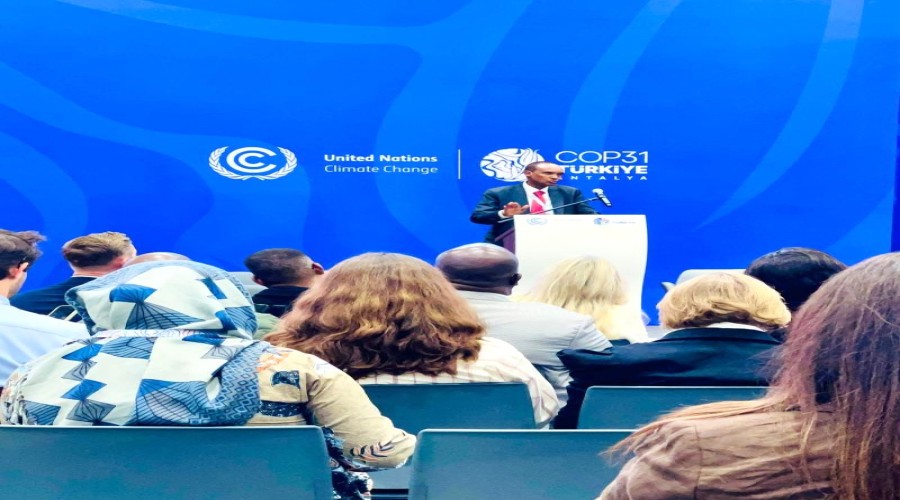
Climate Change, Ambassador Ali Mohamed, has called for COP31 to become an
implementation-focused climate conference, urging governments and development
partners to translate climate commitments into funded projects that deliver tangible
benefits for local communities.
Speaking at the closing
plenary of the COP31 Subnational Investment Forum in Antalya, Türkiye, convened
by Climate Group, Ambassador Ali emphasised the importance of placing states
and regions at the centre of climate investment discussions.
He noted that much of what
is agreed at COP will be delivered by people who rarely sit in the negotiating
room, including local leaders responsible for decisions on protecting roads
from flooding, maintaining water supplies during droughts and making clean
energy affordable for households and businesses.
With the third round of
Nationally Determined Contributions underway and National Adaptation Plans
advancing, he said every climate commitment must answer three practical
questions: who will deliver it, with what resources, and by when?
The Special Envoy recalled
that during the inaugural Africa Climate Summit in Nairobi in 2023, African
leaders called for the continent’s renewable energy generation capacity to
increase from 56 gigawatts in 2022 to at least 300 gigawatts by 2030.
He highlighted the
Accelerated Partnership for Renewables in Africa and the Africa Green
Industrialisation Initiative as efforts to translate renewable energy capacity
into productive capacity, local value addition and jobs.
However, he cautioned that
clean energy investment remains deeply uneven across the continent. He also
drew attention to the continued impact of household air pollution from
polluting cooking fuels, which contributes to around 850,000 premature deaths
across Africa each year.
Ambassador Ali outlined four
priorities for governments and stakeholders to advance between the Antalya
forum and COP31 in Addis Ababa.
These include making
resilient development a defining priority by planning and financing power,
water, cold storage and roads together; mobilising climate finance at the scale
and on the terms required for implementation; equipping counties, cities and regions
to translate local priorities into costed project pipelines; and bringing
evidence of delivery to COP32.
He identified the third
replenishment of the Green Climate Fund as an opportunity to expand predictable
financial support for local priorities.
He also called for progress
to be measured through concrete results, including projects that have secured
financing, gone to tender or entered construction.
“When we meet in Addis, let
us be able to name the communities that are safer, the households that can cook
cleanly, and the businesses that have reliable power to grow. That is the
progress our citizens have a right to expect from us,” Ambassador Ali said.
The COP31 Subnational
Investment Forum brought states and regions into the climate investment
conversation, highlighting the role of local and regional authorities in
translating national and international climate commitments into practical
action.