By: Nana
Appiah Acquaye
The European Space Agency
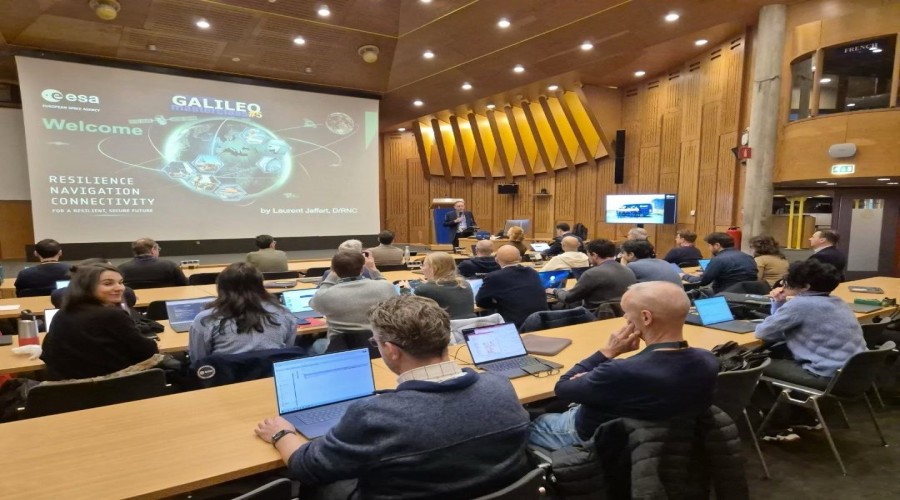
(ESA) has opened its Galileo Master Class at the European Space Technology and
Research Centre (ESTEC) in the Netherlands, bringing together experts and the
next generation of engineers to strengthen knowledge of Europe’s satellite
navigation system and explore future positioning, navigation and timing (PNT)
capabilities.
Laurent Jaffart, ESA
Director of Resilience, Navigation and Connectivity and Head of ECSAT, said the
programme would provide an opportunity to examine Galileo from end to end while
looking beyond the current system towards emerging navigation technologies,
including Celeste, Low Earth Orbit-based Positioning, Navigation and Timing
(LEO-PNT) and Lunar PNT.
Opening the Master Class,
Jaffart emphasised that Europe’s navigation capabilities depend not only on the
technology it develops but also on the people who design, build and continue to
evolve it.
Galileo is one of Europe’s
major technological achievements, providing a sophisticated system of systems
that supports European independence in satellite navigation and delivers
critical services to citizens, businesses and public authorities.
However, he noted that the
PNT landscape is evolving, with new architectures, LEO-based navigation,
resilience requirements and emerging applications creating the need to build on
existing expertise and prepare for future developments.
Jaffart highlighted
knowledge sharing as an important part of this process, particularly in
transferring the engineering expertise and experience developed through Galileo
to the next generation of specialists.
The three-day Master Class
will bring together experienced professionals and emerging engineers to explore
the Galileo system while examining future navigation capabilities.
For the first time, the
programme will also include the business dimension of satellite navigation,
examining how engineering expertise can translate into value for Europe.
Jaffart urged participants
to look beyond their individual disciplines, challenge assumptions and develop
an understanding of navigation systems as a whole.
He described the knowledge
and engineering culture built through Galileo as strategic assets for Europe,
stressing the responsibility to preserve and build on these capabilities to
sustain innovation.
“Galileo's story is far from
finished. The next chapter is yours to help shape,” he said.