By: Nana
Appiah Acquaye
Ghana’s Responsible AI Lab
(RAIL) at Kwame Nkrumah University of Science and Technology has highlighted
the need for human-centred and inclusive artificial intelligence as it
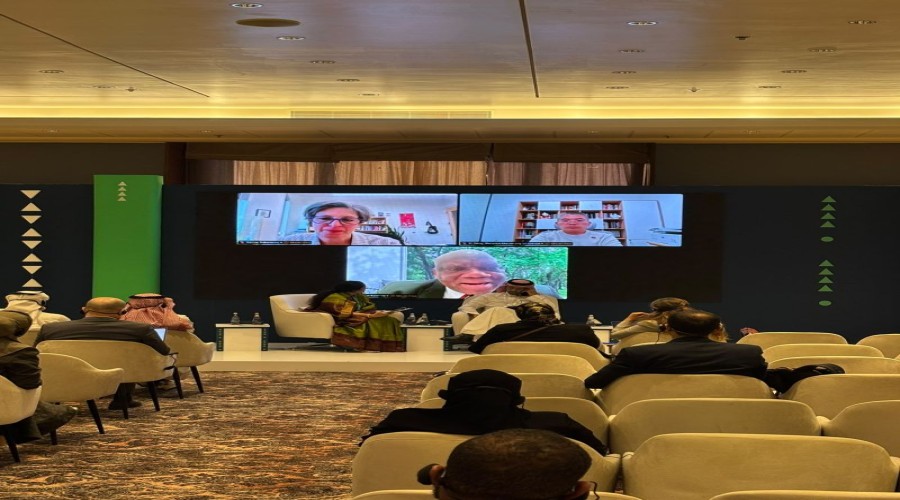
showcased its work in health and agriculture at the 4th UNESCO Global Forum on the
Ethics of AI.
Prof. Jerry John Kponyo,
Principal Investigator and Scientific Director of RAIL, represented the
laboratory at the 2026 Global Forum on the Ethics of AI, which brought together
global perspectives on the ethical governance of artificial intelligence.
The forum focused on the
theme “Transforming Global Cooperation for Ethical AI Governance” and examined
progress in AI ethics since UNESCO’s 2021 Recommendation on the Ethics of AI.
Co-hosted by UNESCO and the
Kingdom of Saudi Arabia, represented by the Saudi Data & AI Authority
(SDAIA) and the International Centre for AI Research and Ethics (ICAIRE), the
forum provided a platform for global dialogue, collaboration and policy innovation
on the ethical dimensions of AI.
The 2026 forum also provided
an opportunity to share perspectives on AI governance, scientific developments,
multilateral approaches and national experiences emerging from UNESCO’s
Readiness Assessment Methodology (RAM), which has been implemented in more than
75 Member States.
Prof. Kponyo was invited to
discuss RAIL’s work on physical AI systems in health and agriculture and the
ethical issues encountered in deploying those solutions. He also highlighted
the laboratory’s work in leveraging AI to advance the Sustainable Development
Goals.
He stressed the need for AI
development and deployment to remain human-centred, respect the dignity of the
human person and protect the environment.
Prof. Kponyo also emphasized
that AI deployment should not create a class system based on access to
technology and infrastructure. He noted that Ghana’s National AI Strategy has
been intentional about ensuring that AI solutions can work in environments where
internet connectivity is limited and power is unavailable.
Among the examples he cited
was RAIL’s crop disease solution, an AI tool designed to work offline and in
farmers’ own languages, enabling agricultural support to reach communities
regardless of connectivity.
He also highlighted “Sign
Talk,” a solution designed to improve access to medical care in consulting
rooms for people with hearing and speech impairments.