By:
Robert Kwaku Annor
Togo has launched the
National Local Language Challenge, opening a contribution platform to collect
texts, recordings and translations that will help artificial intelligence
models understand the country’s local languages and improve access to digital
public services.
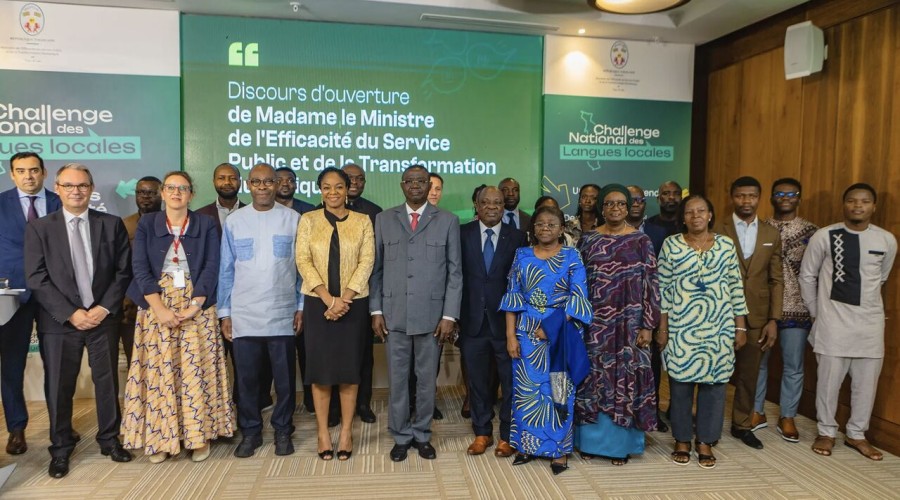
The initiative was launched
in Lomé by Cina Lawson, Minister of Public Service Efficiency and Digital
Transformation, as the first stage of the #VoixDuTogo program.
The launch was attended by
several members of the Government, including Colonel Hodabalo Awate, Minister
of Territorial Administration and Customary Affairs; Isaac Tchiakpe, Minister
of Culture and Tourism; and Prof Gado Tchangbedji, Minister Delegate for Higher
Education and Scientific Research.
The initiative seeks to
address the limited availability of digital language resources in Togo by
building datasets that can be used to train and improve AI models.
“In order for a citizen to
be able to communicate with a digital public service in his or her language in
the future, the Intelligence Artificielle must learn to understand it,” the
ministry said.
To achieve this, the program
is seeking texts, recordings and translations in local languages that are
currently not sufficiently represented in digital resources.
The first phase will run as
a one-month pilot covering Ewe, Kabiyè and Moba. The pilot will be used to test
the approach before it is extended to other languages spoken in Togo.
Participants can create an
account using their phone number and indicate the languages they speak, read or
write. They will then receive tasks adapted to their skills, including reading
sentences aloud, transcribing recordings, translating texts and verifying
contributions from other participants.
The collected data will be
validated by linguists and local communities before being used to support AI
development.
The Togo AI Lab, together
with students, researchers and developers, will contribute to exploiting the
resources to train and improve AI models, including through competitions
organized on Zindi.
The government says the
initiative is aimed at advancing digital inclusion through tools that can
facilitate access to public services, health and justice in local languages.
Field agents will also
collect contributions in localities where access to telephone and internet
services remains limited, allowing communities with limited connectivity to
participate in the development of the country's digital language resources.
The initiative is intended
to build these resources collectively, with contributions from citizens
providing examples that can help future AI models better understand Togo’s
linguistic diversity.