By: Nana
Appiah Acquaye
The European Commission has
proposed the EU KIDS Act, a new framework aimed at strengthening online safety
for children by requiring digital services to be safer by design and setting 15
as the minimum age for children to independently create social media accounts.
The proposal was presented
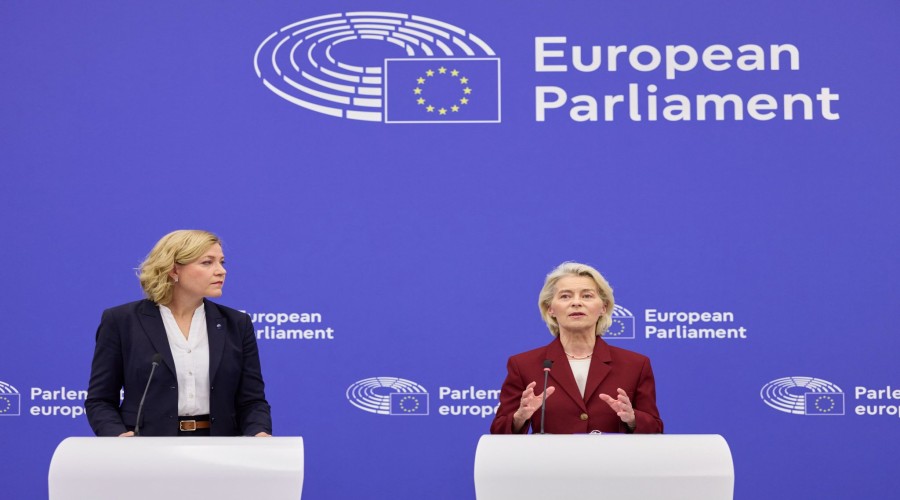
by European Commission President Ursula von der Leyen and Executive
Vice-President for Tech Sovereignty, Security and Democracy Henna Virkkunen as
part of efforts to establish stronger protections for minors across the
European Union.
Under the proposal, children
aged 13 and 14 would not be able to create autonomous social media accounts.
Instead, parents or guardians would be able to establish supervised mini
accounts with limited features and screen-time restrictions. The European Commission's
proposal also provides that children under 13 would not have access to social
media platforms, while specially designed child-friendly services could be
available under parental management.
The KIDS Act is built around
four pillars: social media delay, safety by design, privacy-preserving age
assurance and stronger enforcement.
The safety-by-design
provisions would establish requirements for social media platforms,
video-sharing platforms, online video games, AI companions and chatbots
providing services to minors. The proposal would place greater responsibility
on service providers to demonstrate that their services are age-appropriate and
safe for children.
On age assurance, platforms
covered by the proposed social media restrictions would be required to use
age-verification tools based on the EU's age-verification blueprint. The system
is designed to verify age while avoiding the retention of identity documents or
biometric data, with privacy protection forming a key part of the proposed
framework.
The enforcement framework
would build on existing structures under the Digital Services Act and the
Artificial Intelligence Act. The proposal also introduces expedited enforcement
procedures, with the European Commission targeting the conclusion of investigations
within 90 days in applicable cases.
The Commission's proposal
has been submitted to the European Parliament and the Council of the European
Union for examination as part of the legislative process.
Virkkunen said the
initiative would seek to give children the ability to learn, stay connected and
explore online while providing parents with tools to support safer digital use
and placing greater responsibility on platforms to demonstrate that their services
do not harm young users.