By: Atieno Nancy Onyango
As Countries accelerate their digital transformation
journeys, attention is increasingly turning to the institutions responsible for
governing digital technologies. While expanding connectivity remains a
priority, emerging technologies such as artificial intelligence, cybersecurity,
satellite connectivity, and digital public infrastructure are creating new
regulatory challenges that require stronger institutions, deeper collaboration,
and continuous learning.
These conversations shaped the World Summit on the
Information Society (WSIS) Forum 2026, where governments, regulators,
development partners, academia, civil society, and the private sector gathered
in Geneva to reflect on two decades since the original World Summit on the
Information Society and explore how digital technologies can better support
sustainable development. Serving as both a stocktake of progress and a platform
for shaping the next phase of global digital cooperation, the Forum focused on
implementing the WSIS+20 outcomes, advancing the Global Digital Compact,
strengthening international cooperation on AI governance, and building the
partnerships needed to create more inclusive and resilient digital societies.
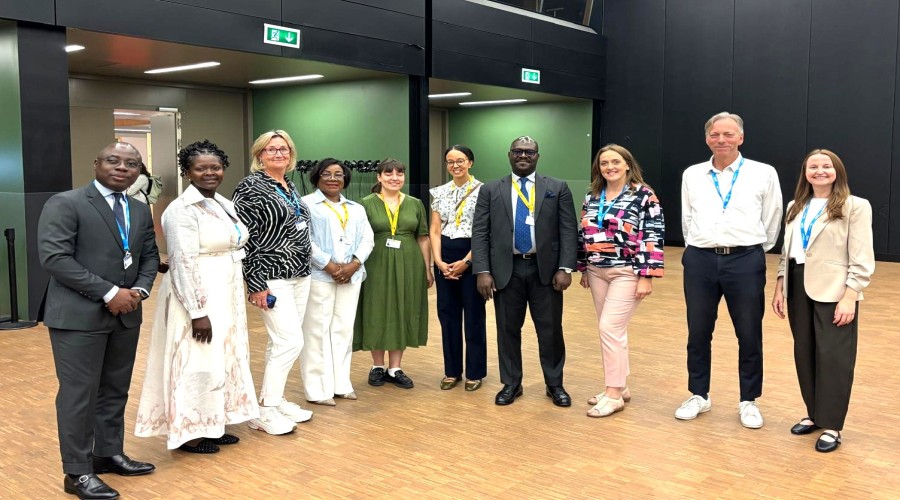
Against this backdrop, the Swedish Program for ICT in
Developing Regions (SPIDER) hosted a session titled Enabling Inclusive Digital
Development: Regulatory Capacity-Building through Multilingual Peer-to-Peer
Learning between the European Union and Sub-Saharan Africa. The discussion
highlighted how collaboration between African and European regulators is
strengthening institutional capacity and supporting more inclusive digital
development.
At the heart of this collaboration is the ICT Policy
& Regulation – Institutional Strengthening (iPRIS) initiative, which brings
together telecommunications regulators from Africa and Europe through
multilingual peer-to-peer learning and knowledge exchange. Operating in English,
French, and Portuguese, iPRIS enables regulators to share practical experience,
strengthen institutional capacity, and address common digital policy
challenges. Over the coming year, the initiative will connect regulators across
39 Sub-Saharan African countries, engage more than 200 participants, and
support over 50 institutional change initiatives.
Reflecting many of the priorities discussed throughout
WSIS Forum 2026, the session explored how stronger regulatory institutions can
expand meaningful connectivity, protect consumers, foster digital inclusion,
and encourage investment ensuring that digital transformation delivers tangible
social and economic benefits.
Speaking during the session, Edna Soomre, Head of
Partnerships, Innovation & Digital Health and iPRIS Project Lead at SPIDER,
emphasised that digital transformation must remain grounded in inclusion and
trust.
"Regulation has to be equitable and inclusive so
that we can give people the access that they need. Technology is adopted only
when it is trusted, used, and brings value to people."
Katarina Schyberg, iPRIS Project Manager at the
Swedish Post and Telecom Authority (PTS), highlighted the value of peer-to-peer
learning in addressing shared regulatory challenges across regions.
"European and African regulators face shared
challenges, and we focus on discussing best practices from both the African
continent and Europe."
The discussion underscored how effective regulation
creates an enabling environment for innovation while safeguarding citizens and
consumers. As governments continue investing in digital transformation,
regulators are playing an increasingly important role in fostering investment,
promoting fair competition, and building trusted digital ecosystems. The panel
brought together representatives from SPIDER, the Swedish Post and Telecom
Authority (PTS), the Institut Luxembourgeois de Régulation (ILR), Portugal's
National Communications Authority (ANACOM), and the West Africa
Telecommunications Regulators Assembly (WATRA), reflecting the collaborative
approach that lies at the heart of the iPRIS initiative.
Moderating the discussion, Aliyu Yusuf Aboki,
Executive Secretary of WATRA, highlighted the importance of ensuring that
knowledge exchange remains accessible to all regulators, regardless of
language.
"An important lesson from iPRIS is that knowledge
exchange depends on accessibility, and language should never be a barrier to
collaboration and learning."
Tantely Jeans, iPRIS Project Manager at ILR, reflected
on the role of trust and collaboration in shaping the future of digital
connectivity.
"The future of digital connectivity will not
depend on technology alone; it will depend on our ability to cooperate, to
share knowledge, and to build trust. And this is precisely what iPRIS makes
possible."
Reflecting on the broader value of international
regulatory cooperation, Manuel Cabugueira, Board Member at ANACOM, noted that
collaboration extends beyond technical knowledge-sharing to supporting wider
economic development.
"There is a different perspective on regulatory
cooperation. It's not only about learning, sharing solutions and technologies,
but also, and most importantly, how we use these technologies as a tool to
improve trade, making it more secure and easier."
Reflections from Winnie Mukholi of the Uganda
Communications Commission (UCC) and Mbongeni Bafana Mtshali of the Eswatini
Communications Commission (ESCCOM), both alumni of the fifth iPRIS cohort,
demonstrated how the initiative has strengthened collaboration and practical
knowledge exchange among regulators.
Mukholi highlighted the importance of learning from
fellow African regulators, observing that while many institutions traditionally
benchmark internationally, iPRIS demonstrated the value of sharing experiences
with neighbouring countries facing similar regulatory realities.
"Many times we seek out to benchmark at the
international level, but the opportunity to meet fellow regulators within our
own continent showed us that our challenges don't differ so much."
Mtshali added that peer learning enables African
regulators to develop solutions together while drawing on international
experience.
"Peer education becomes very, very vital because
as Africa we can find other solutions within ourselves. Europe has developed
far and wide, and learning from those experiences helps open your mind to other
possibilities."
The session also marked another significant milestone
with the signing of a Memorandum of Understanding (MoU) between SPIDER and
ANACOM. The agreement formalises a strategic partnership that will deepen
collaboration with Lusophone countries across Africa—including Angola,
Mozambique, Cape Verde, Guinea-Bissau, and São Tomé and Príncipe. It supports
the expansion of iPRIS's multilingual peer-learning model and lays the foundation
for a new Portuguese-language learning cycle beginning in February 2027,
reinforcing a shared commitment to strengthening regulatory capacity and
advancing inclusive digital development across Portuguese-speaking countries.
As the telecommunications experts departed Geneva, one message
resonated throughout the week: meaningful digital transformation is no longer
measured simply by expanding access to technology, but by strengthening the
institutions, partnerships, and regulatory frameworks that enable technology to
deliver lasting social and economic impact.
As countries work towards implementing the WSIS+20 commitments, the discussions reinforced
that achieving the Sustainable Development Goals and the ambitions of Africa's
Agenda 2063 will depend as much on institutional capacity, collaboration, and
shared learning as on technology itself. Through initiatives such as iPRIS,
regulators across Africa and Europe are already demonstrating how international
cooperation can build stronger institutions and create a more inclusive,
resilient, and people-centred digital future.