ACET CEO calls for structural economic transformation at IMF–World Bank Spring Meetings
Date: 2026-04-24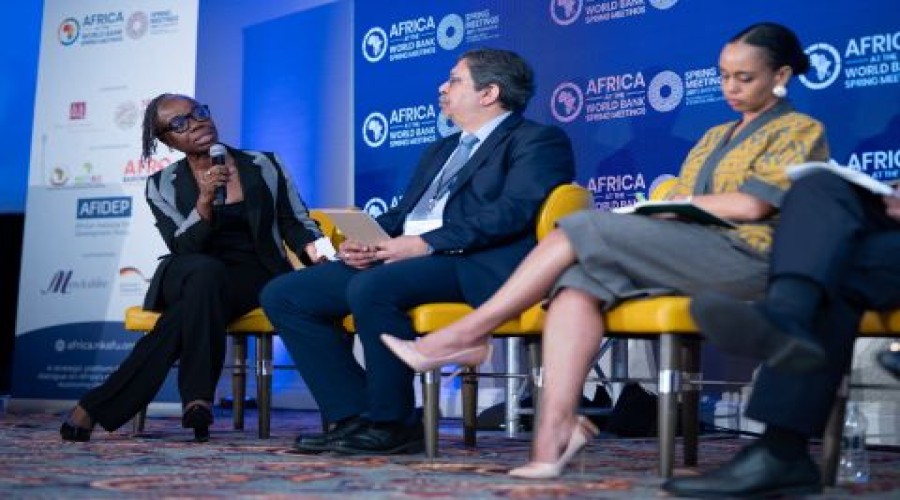
By: Nana Appiah Acquaye
The
President and Chief Executive Officer of the African Center for Economic
Transformation, Mavis Owusu-Gyamfi, has called for a renewed focus on
structural economic transformation across Africa, warning that emerging
technologies such as artificial intelligence cannot substitute for strong
economic foundations.
Speaking
following engagements at the International Monetary Fund and World Bank Group
Spring Meetings, Owusu-Gyamfi emphasized that Africa’s resilience in the face
of global shocks depends on building productive capacity, deepening regional
markets, and ensuring that growth translates into decent job creation.
She
noted that while innovation and digital technologies are gaining prominence,
they risk being overemphasized as quick solutions without the necessary
economic structures to support sustainable development. She stressed that
economic transformation remains the continent’s most viable pathway to
long-term resilience.

Owusu-Gyamfi
highlighted growing alignment among African institutions and partners on the
need to move beyond growth-focused models toward structural change. Discussions
with stakeholders, including the African Union, the African Peer Review
Mechanism, and other policy and research organisations, underscored the urgency
of advancing green industrialisation, particularly in the context of
fluctuating commodity and energy prices.
She
also pointed to increased coordination among African countries and regional
institutions in engaging the global financial system, noting that a more
strategic and collective approach is strengthening the continent’s negotiating
position and shaping its development trajectory.
On
financing, Owusu-Gyamfi acknowledged the growing emphasis on domestic resource
mobilisation, including strengthening tax systems and improving public
financial management. However, she cautioned that this shift should not replace
the responsibility of global partners to provide adequate support, particularly
in a constrained financing environment.
She
called for a balanced approach that combines stronger domestic efforts with
sustained international cooperation to ensure effective and inclusive
development outcomes, especially for vulnerable populations.
Owusu-Gyamfi
reaffirmed ACET’s commitment to supporting Africa’s transformation agenda
through research, policy engagement, and partnerships, including its role in
the Future of Development Cooperation Coalition.