Cyber Security Authority trains Ministry of Gender staff on cyber risks and child online protection
Date: 2026-04-17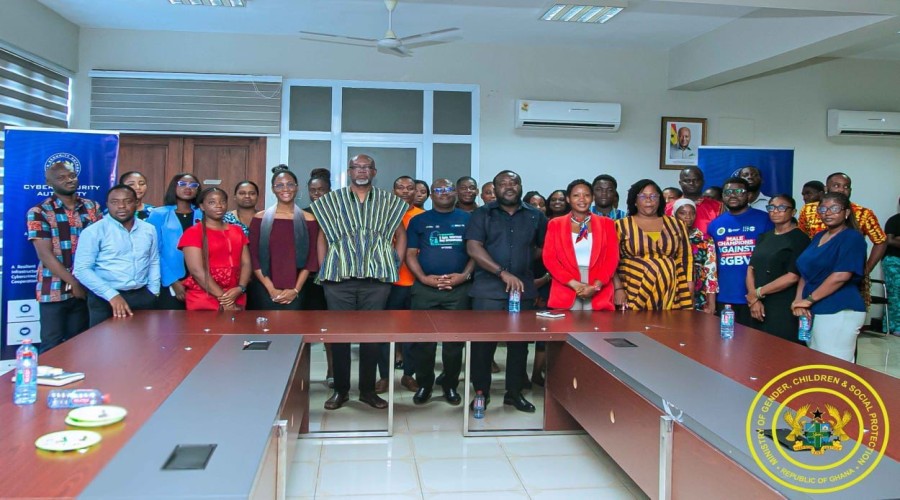
By: Kanto Kai Okanta
The
Cyber Security Authority (CSA) Ghana has conducted a four-day training
programme on cybersecurity and child online protection for staff of the
Research, Statistics and Information Management (RSIM) Directorate of the
Ministry of Gender, Children and Social Protection.
The workshop focused on strengthening institutional
awareness of online risks affecting children in Ghana, while also providing a
broader overview of the country’s cybersecurity landscape and evolving threat
environment.

Facilitators highlighted a range of persistent cybersecurity threats, including disinformation and misinformation, impersonation cases driven in part by the growing use of artificial intelligence, insider threats, digital extortion, and business email compromise.
Participants were also taken through
common vulnerabilities exploited by threat actors, including weak password
practices, outdated software and operating systems, the circulation of
malware-infected files, use of pirated software, and exposure to risks associated
with public or unsecured Wi-Fi networks.
In a technical presentation, Mr. Eric
Kafui Bansah outlined key attack vectors and methods used by cybercriminals,
emphasizing how emerging technologies such as deepfakes are increasingly being
used to deceive users and compromise systems.

Another session led by Mr. Nelson Herald Darko focused on online child sexual exploitation. He outlined major risks faced by children in digital spaces, including sexual extortion, transactional relationships, exposure to explicit content, and cyberbullying.
He further explained the grooming
tactics used by predators, commonly referred to as the “7 Ps,” which include
praise, precocious conversations, creating a sense of privacy, giving gifts,
and gradually isolating children from trusted adults.
The
training forms part of ongoing efforts to strengthen institutional capacity in
safeguarding vulnerable groups online and improving national resilience against
cyber threats.