Ghana advances ethical AI strategy with UNESCO-Funded readiness assessment
Date: 2026-03-10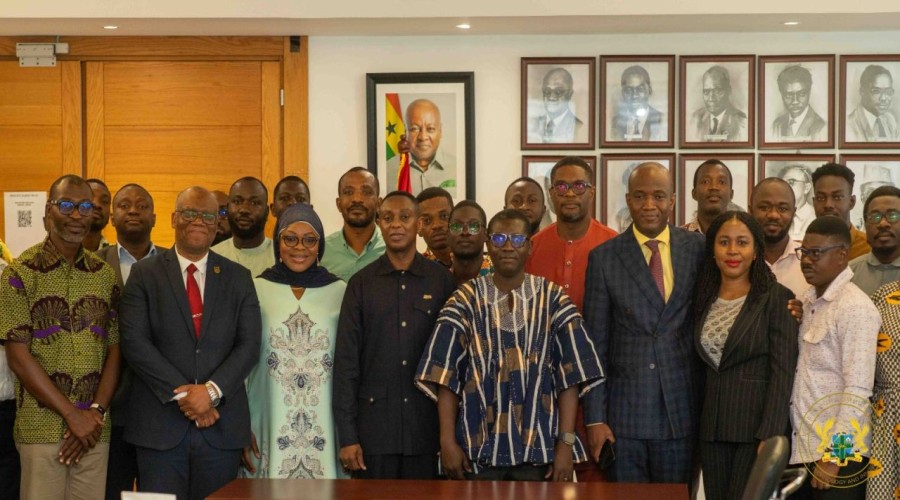
By: Nana Appiah Acquaye
Ghana
is taking steps to strengthen its ethical and responsible Artificial
Intelligence (AI) ecosystem through a series of stakeholder consultations
organized by the Ministry of Communication, Digital Technology and Innovations,
Ghana, with technical support from UNESCO and funding from the European Union.
The
first consultation brought together Ministries, Departments, and Agencies
(MDAs) to examine Ghana’s AI governance framework. During the session, Prof.
Jerry John Kponyo, Principal Investigator and Scientific Director of the
Responsible AI Lab (RAIL), presented findings from the Artificial Intelligence
Readiness Assessment Methodology (RAM) report, offering a comprehensive
overview of the country’s preparedness to implement AI ethically.

Prof.
Kponyo explained that RAM is a global tool designed to evaluate a nation’s
institutional, legal, social, scientific, and technical capacity to deploy AI
in accordance with the UNESCO Recommendation on the Ethics of AI, which Ghana
adopted in 2021 along with all other UNESCO member states. He emphasized the
importance of understanding Ghana’s current position and identifying areas for
improvement.
Representatives
from UNESCO also contributed to the discussions. James Wright highlighted the
organization’s mandate to link science and technology to human values, while
Carl Ampah stressed that technological progress must uphold human dignity and
equality. Ampah noted that Ghana’s engagement in the RAM assessment is a key
step in preparing for the ethical implementation of AI, warning that misuse
could exacerbate inequalities and undermine public trust.

From
the government side, Emmanuel Ofori, Director of Innovations at the Ministry,
underscored the pivotal role of public institutions in guiding responsible AI
adoption. He called for transparency, inclusivity, and robust governance in
shaping Ghana’s AI future, asserting that “government institutions sit at the
centre of AI governance, and we must get it right.”
The
consultations form part of Ghana’s broader effort to ensure that AI development
aligns with human rights, social responsibility, and national priorities,
positioning the country as a leader in ethical AI deployment in Africa.