By:
Nana Appiah Acquaye
The
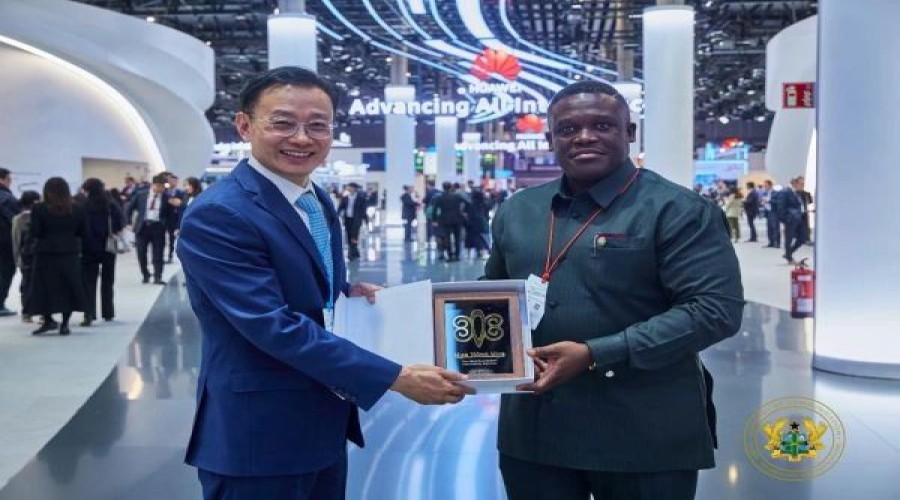
Minister for Communications, Digital Technology and Innovations, Samuel Nartey
George, has secured a commitment from Huawei Technologies to provide free
artificial intelligence training for girls in Ghana under the government’s
flagship Girls in ICT Programme.
The
agreement was reached during a meeting between the minister and Steven Yi,
Senior Vice President of Huawei, on the sidelines of the Mobile World Congress
2026 in Barcelona, Spain.
According
to the minister, Huawei’s commitment represents a multi-million dollar
investment aimed at supporting digital skills development among young girls in
Ghana. The partnership will introduce an artificial intelligence component into
the existing Girls in ICT Programme, which currently focuses on coding,
animation using Scratch, and basic computing skills during a two-week training
period.
Mr.
Nartey George said the addition of AI training will help expand opportunities
for participants and create a pathway for further digital skills development.
He explained that students who complete the AI training will be able to
continue their learning through the government’s One Million Coders Programme,
allowing them to deepen their knowledge and build careers in technology.
For
this year’s rollout, the Huawei Senior Vice President has directed the
company’s Ghana office to work with the Ghana Investment Fund for Electronic
Communications and the ministry to implement the AI training for about 3,000
girls participating in the Girls in ICT Programme.
The
discussions between the minister and Huawei also covered broader cooperation in
Ghana’s digital ecosystem. The company expressed interest in several
initiatives, including the proposed US$250 million artificial intelligence
compute centre, rural telephony expansion, and the rollout of 5G technology in
the country.
In
addition, the minister revealed that talks were held with Huawei on the
possibility of establishing a handheld devices assembling plant in Ghana. The
proposed facility would focus on producing affordable smart devices for the
Ghanaian market and potentially for export to neighbouring countries.