ICT Minister launches Wa3i.net platform and oversees MoU signing on child online protection
Date: 2026-03-02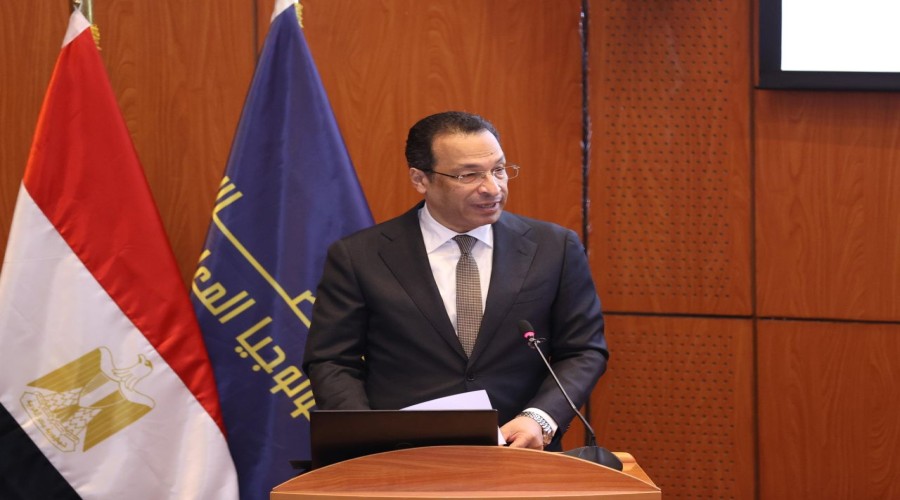
By: Nana Appiah Acquaye
Egypt’s
Minister of Communications and Information Technology, Raafat Hendy, has
witnessed the official launch of the Wa3i.net platform under the Digital
Citizenship and Online Safety Initiative, coinciding with Safer Internet Day in
February. The event also featured the signing of a memorandum of understanding
between the Ministry of Communications and Information Technology (MCIT) and
the National Council for Childhood and Motherhood (NCCM) to strengthen
cooperation on child online protection.
Wa3i.net
is among the first integrated Arabic platforms dedicated to digital citizenship
and online safety. It provides age-classified content tailored to children,
adolescents, youth, parents, educators and the elderly. The platform aims to
promote safe and responsible use of technology, raise awareness of digital
risks, build critical thinking skills, safeguard personal data and support
families and educators with practical guidance and resources.

The
launch event was attended by NCCM President Sahar El Sonbaty, UNICEF
Representative in Egypt Natalia Winder Rossi, UNDP Egypt Resident
Representative Chitose Noguchi, senior MCIT officials, NCCM board members and
civil society representatives.
During
the ceremony, Hendy and El Sonbaty oversaw the signing of the MoU, which was
formalized by Hoda Dahroug, Advisor to the ICT Minister for Digital Community
Development and Regional Director of the Digital Transformation for Sustainable
Development in Egypt Project, and NCCM Secretary-General Wael Abdel-Razek.
In
his remarks, Hendy said the launch of Wa3i.net and the signing of the MoU
reflect the state’s commitment to protecting citizens, particularly children,
amid accelerating digital transformation. He described child online protection
as a matter of societal security and human development, citing risks such as
digital addiction, cyberbullying, exposure to inappropriate content and online
exploitation.
Hendy
noted that the initiative aligns with directives from President Abdel Fattah
El-Sisi to ensure that digital infrastructure expansion is accompanied by
enhanced public awareness, especially among children and adolescents.
He
also said the MoU comes as the House of Representatives discusses a national
legislative framework to regulate children’s internet use while safeguarding
their access to online learning and creativity. MCIT has submitted a
comprehensive plan built on five pillars, including the application of
age-appropriate protection standards for games and websites, blocking harmful
online games, and requiring platforms to adopt child-safe default settings.
The
plan further предусматри cooperation with the Ministry of Social Solidarity and
NCCM to raise family awareness of online safety tools, and collaboration with
the Ministry of Education to integrate digital safety into school curricula and
activities.
El
Sonbaty described the cooperation protocol as a step toward stronger
institutional coordination in child online protection. She said the partnership
will focus on developing specialized awareness content, improving access to
support services and building professional capacity in digital citizenship. She
emphasized that digital safety is a national priority and an extension of
children’s right to protection and development.

Under
the agreement, MCIT will develop and provide interactive digital awareness
content through Wa3i.net, ensure accessibility for children with disabilities
and protect children’s data privacy. The ministry will also organize workshops
and training sessions for children, parents and educators, and build specialist
capacity in cooperation with NCCM and other national partners.
NCCM
will lead national child protection awareness efforts, set policies and
strategies, coordinate with relevant authorities and provide support services
across governorates. The council will review digital content prior to
publication to ensure its suitability and accuracy, contribute to child-focused
content development and conduct nationwide awareness sessions on digital
citizenship and online safety.
UNICEF
and UNDP representatives affirmed their support for Egypt’s efforts to promote
inclusive and responsible digital transformation. They highlighted the
importance of safeguarding vulnerable groups, particularly children, as part of
the country’s transition toward a knowledge-based society.
According
to MCIT, the Digital Citizenship and Online Safety Initiative has so far
delivered 38 training courses under its online protection programme, benefiting
1,727 teachers, and 13 training courses on essential digital citizenship skills
for 658 participants. In total, 2,385 youth and teachers have benefited from
training activities.
The
initiative has also organized 40 online awareness sessions for 1,868 parents,
guardians and youth, as well as 41 interactive workshops for 2,472 children and
adolescents, implemented in cooperation with public libraries, schools, youth
centers, governorates and civil society organizations.