RCMRD launches disaster risk management strategic plan to strengthen climate resilience
Date: 2026-02-17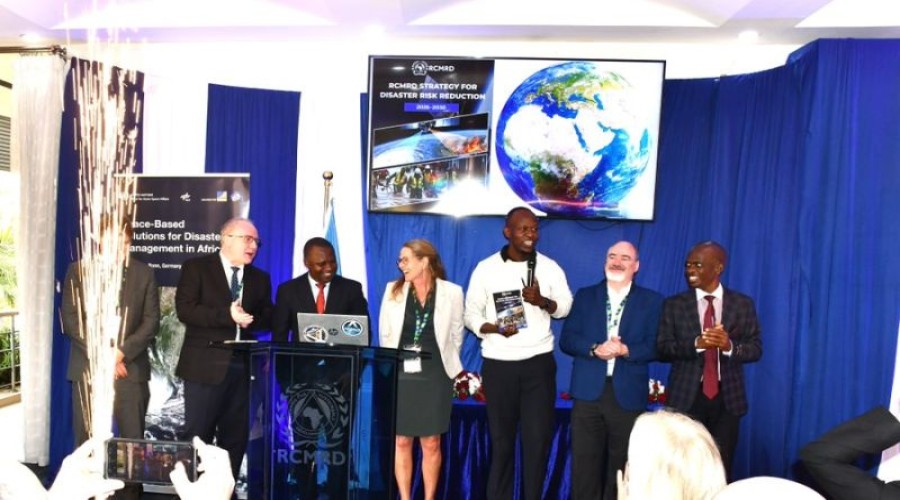
By: Nana Appiah Acquaye
The
Regional Centre for Mapping of Resources for Development (RCMRD) has unveiled a
new Disaster Risk Management Strategic Plan aimed at supporting its member
States, many of which are among the most vulnerable globally to climate-related
hazards.
The
Strategy comes at a time when disasters are increasing in both frequency and
intensity, driven by climate change and compounded by rapid urbanization,
population growth, environmental degradation, and socio-economic
vulnerabilities. RCMRD said the plan is designed to help countries better
anticipate, manage, and mitigate disaster risks through the expanded use of
geospatial technologies.
According
to the Centre, the Strategic Plan prioritizes the integration of earth
observation, remote sensing, and spatial data analytics into national and
regional disaster risk management frameworks. By leveraging these technologies,
member States are expected to enhance early warning systems, improve risk
assessment capabilities, and strengthen preparedness and response mechanisms.
RCMRD
indicated that the Strategy will focus on building both technical expertise and
infrastructure capacity across its member countries. This includes
strengthening institutional capabilities, improving data accessibility, and
fostering collaboration among national agencies, research institutions, and
regional partners.

The
Strategic Plan is structured to address the entire disaster risk management
cycle, spanning prevention, preparedness, response, and recovery. The Centre
emphasized that this comprehensive approach is essential to reducing disaster
impacts while promoting long-term resilience.
RCMRD
further noted that the Strategy aligns with key global and regional policy
frameworks, including the Paris Agreement, the Sendai Framework for Disaster
Risk Reduction, and the Sustainable Development Goals. It also supports
initiatives such as Early Warnings for All, the Africa Strategy for Disaster
Risk Reduction, and the Windhoek Declaration on Disaster Risk Reduction.
The
Centre underscored that partnerships will be central to the implementation of
the Strategy. Stakeholders involved in the broader disaster risk reduction and
space-based technology ecosystem, including the United Nations Office for Outer
Space Affairs (UNOOSA), the United Nations Office for Disaster Risk Reduction
(UNDRR), the Intergovernmental Authority on Development’s Climate Prediction
and Applications Centre (ICPAC), the Kenya Space Agency, and the European Space
Agency (ESA), are expected to play collaborative roles.
With
the launch of the Strategic Plan, RCMRD reaffirmed its commitment to supporting
member States in harnessing geospatial science and technology as critical tools
for disaster resilience and sustainable development.