DSTI Director-General reflects on HIV research progress at CAPRISA annual meeting
Date: 2026-02-17
By: Kanto Kai Okanta
South
Africa’s Department of Science, Technology and Innovation (DSTI) has reaffirmed
its commitment to advancing health research and innovation following its
participation in the CAPRISA Annual Research Meeting held at the Musgrave Hotel
in KwaZulu-Natal.
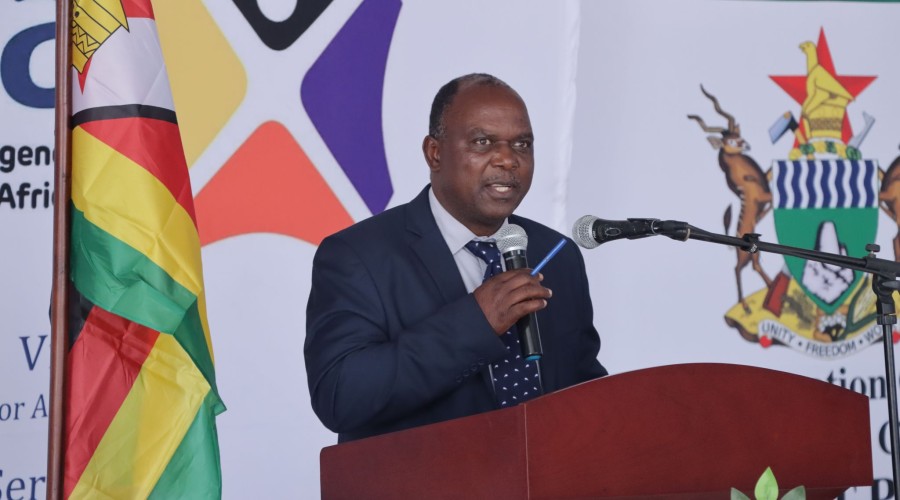
Delivering
a keynote address at the event, Dr Mlungisi Cele, Director-General of the
Department of Science, Technology and Innovation, reflected on the trajectory
of HIV research in South Africa, highlighting both the country’s scientific
gains and the challenges that remain.

Dr
Cele opened his remarks by paying tribute to Nelson Mandela and Nkosi Johnson,
noting that their legacies continue to inspire the scientific and medical
communities to pursue solutions with urgency and resolve.
He
cited recent statistics indicating that more than eight million people in South
Africa were living with HIV in 2025, with approximately 6.2 million receiving
antiretroviral therapy. According to Dr Cele, these figures underscore
significant progress in treatment access while also pointing to the need for
sustained research and intervention efforts.
The
Director-General commended the Centre for the AIDS Programme of Research in
South Africa (CAPRISA) for its contributions to global and regional HIV
research. He referenced landmark studies, including the CAPRISA 004 trial and
the 002 longitudinal study, as examples of high-impact scientific work
developed and executed within Africa.
Dr
Cele emphasized that such research achievements align with South Africa’s
Decadal Plan, which prioritizes the integration of scientific evidence with
societal needs and policy development.

He
further highlighted the importance of community engagement in research,
stressing that treating clinical trial participants as partners rather than
subjects strengthens trust and improves long-term outcomes. He linked this
approach to the broader principle of ubuntu, which underscores collaboration,
dignity, and shared progress.
Concluding
his address, Dr Cele reiterated DSTI’s commitment to strengthening health
sovereignty, supporting innovation-driven research, and fostering the next
generation of African scientific leaders.