Egypt signs record USD 3.5 billion spectrum deal as ICT Minister outlines digital Egypt vision
Date: 2026-02-09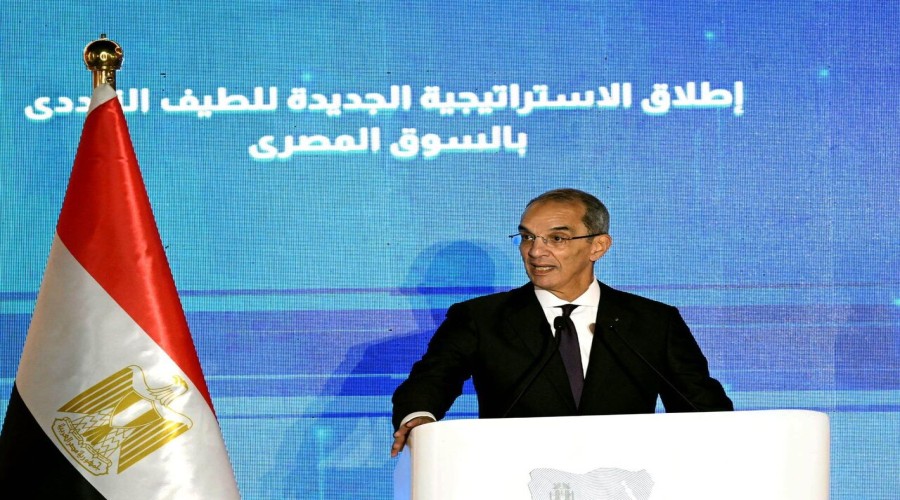
By: Nana Appiah Acquaye
Egypt’s
Minister of Communications and Information Technology, Dr. Amr Talaat, has
described the signing of the largest spectrum deal in the country’s
telecommunications history as a major milestone in the development of Egypt’s
ICT sector. He made the remarks during a signing ceremony organized by the
Ministry of Communications and Information Technology, held in the presence of
Prime Minister Dr. Mostafa Madbouly.

Dr.
Talaat said the agreement represents the biggest spectrum allocation since the
launch of mobile services in Egypt more than 30 years ago, providing mobile
network operators with an additional 410 MHz of spectrum. He noted that this
allocation is equivalent to the total spectrum assigned over the past three
decades and is valued at nearly USD 3.5 billion, accounting for more than
one-third of the sector’s cumulative investments in spectrum and operating
licenses, which stand at USD 10 billion.
According
to the minister, the deal reflects the government’s commitment to building a
human-centric digital society under the Digital Egypt strategy. He explained
that the strategy is anchored on four integrated pillars focused on equipping
citizens with digital skills for the global economy, expanding access to
efficient digital services, harnessing innovation and emerging technologies,
and positioning the ICT sector as a key driver of economic growth.
Dr.
Talaat highlighted digital capacity building as a core priority, noting that
the government aims to train 800,000 individuals during the current fiscal
year, a significant increase compared to 2018. He emphasized that digital
skills have become essential for accessing global job markets and participating
in national digital transformation projects.
On
digital public services, the minister said the Digital Egypt platform, launched
in 2022, now offers more than 210 services through collaboration with state
institutions and the private sector. He added that efforts are ongoing to
advance paperless government and improve service delivery efficiency.

He
also pointed to artificial intelligence and emerging technologies as central to
the third pillar of the Digital Egypt strategy, stressing that technology must
translate into tangible economic and social development. These efforts, he
said, will be showcased at the upcoming AI Everything Middle East and Africa
Summit scheduled for February 11.
Addressing
the sector’s economic impact, Dr. Talaat said the ICT industry has attracted
240 multinational companies exporting digital services from Egypt, creating
more than 170,000 jobs. He noted that the sector’s contribution to GDP has
exceeded 6 percent, up from 3.2 percent in 2018, while digital exports have
grown to USD 7.4 billion in 2025, with a target of USD 9 billion.
The
minister underscored the importance of digital infrastructure, revealing that
the state has invested nearly USD 6 billion in recent years to upgrade mobile
and fixed broadband networks nationwide. He said investments in the fixed-line
network alone amounted to USD 3.5 billion, resulting in a 16-fold increase in
average internet speeds since 2019 and securing Egypt’s position as Africa’s
fastest fixed broadband market for over five consecutive years.

Dr.
Talaat explained that mobile network development has focused on expanding base
stations, which have doubled since 2019, and on increasing spectrum capacity to
meet rising data demand. He noted that total spectrum availability has risen
from 272 MHz before 2019 to 550 MHz following the current agreement, marking an
unprecedented expansion in Egypt’s spectrum management history and supporting
the rollout of 5G services launched in June 2025.
He
described the spectrum agreements as a long-term strategic step rather than a
technical exercise, aligning public and private sector efforts to reshape
Egypt’s telecommunications infrastructure. Dr. Talaat expressed appreciation to
the Prime Minister for supporting an attractive ICT investment environment,
commended national institutions including the Egyptian Armed Forces for their
cooperation, and thanked mobile network operators for their continued
investments. He also acknowledged the role of the National Telecom Regulatory
Authority and its leadership in fostering a supportive regulatory framework for
digital infrastructure development.