By: Nana Appiah Acquaye
Singapore
has announced the establishment of the National Space Agency of Singapore
(NSAS), marking a significant milestone in the country’s efforts to strengthen
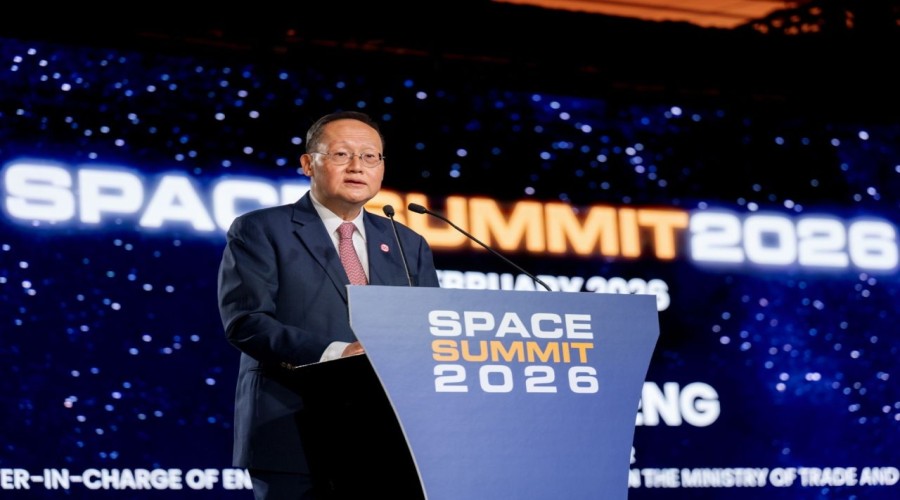
its position in the global space ecosystem. The announcement was made by the
Minister for Manpower and Minister-in-charge of Energy and Science and
Technology at the Ministry of Trade and Industry, Tan See Leng, during the
inaugural Singapore Space Summit held on 2 February.
The
NSAS will be formally established on 1 April 2026 and will assume and build
upon the existing functions of the Office of Space Technology and Industry,
Singapore (OSTIn). In addition to continuing OSTIn’s current mandate, the new
agency will take on expanded responsibilities, including the development and
operation of Singapore’s national space capabilities, as well as the
formulation of legislation and regulatory frameworks that are pro-innovation
and pro-business, while ensuring space safety and sustainability.
The
agency will be placed under the Ministry of Trade and Industry and will serve
as the lead institution driving Singapore’s national space ambitions. Its
mandate includes strengthening the research and development ecosystem,
supporting the growth of the domestic space industry, and advancing
international partnerships, while positioning Singapore as a credible and
responsible contributor to the global space community.
Space
technologies are increasingly central to critical national and global functions
such as digital connectivity, navigation, maritime surveillance and climate
resilience. By leveraging Singapore’s established strengths in advanced
manufacturing, aerospace, micro-electronics, precision engineering and
artificial intelligence, the NSAS is expected to enable the country to capture
emerging opportunities within the rapidly expanding global space economy.
As
the agency takes shape, Singapore has reaffirmed its commitment to close
collaboration with international partners, industry players, academic
institutions and the research community. These partnerships are expected to
play a key role in co-developing solutions, deepening cooperation and promoting
the sustainable and responsible use of outer space.