ESC 2026: European Space Conference examines evolving needs and capabilities in Earth Observation
Date: 2026-01-27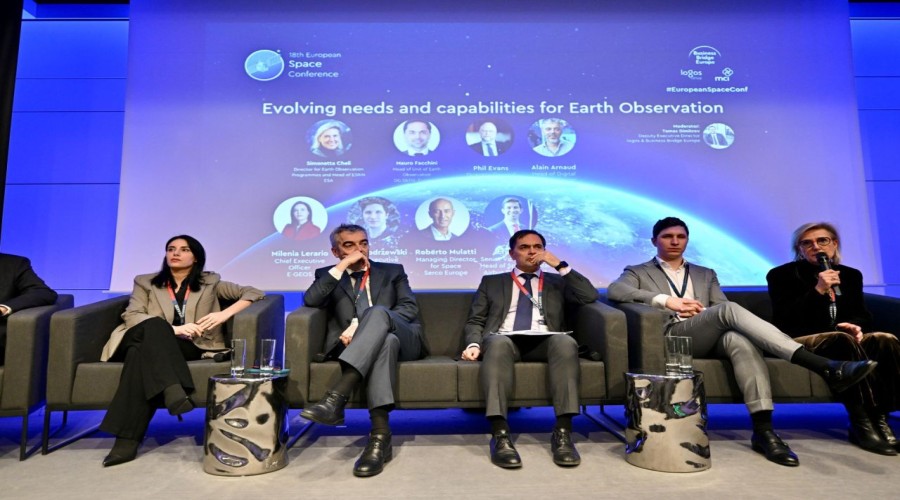
By: Nana Appiah Acquaye
Discussions
at the European Space Conference have focused on the evolving needs and
capabilities of Earth Observation, as stakeholders highlighted the growing
demand for faster, more precise and more actionable data across multiple
sectors.
Speakers
noted that Earth Observation is undergoing a significant transformation driven
by increased requirements in climate monitoring, security, agriculture,
disaster response and industrial competitiveness. As these demands expand,
Europe is being urged to continuously adapt its Earth Observation systems to
remain effective and relevant.
The
panel brought together senior leaders from key European and international space
and data organisations, including Simonetta Cheli, Director of Earth
Observation and Head of ESRIN at the European Space Agency, Mauro Facchini,
Head of Unit for Earth Observation at the European Commission’s
Directorate-General for Defence Industry and Space, and Phil Evans,
Director-General of EUMETSAT.

Other
contributors included Alain A., Head of the Digital Ocean Program at Mercator
Ocean International; C. Milena A. Lerario, Chief Executive Officer of e-GEOS;
Rafal Modrzewski, Chief Executive Officer of ICEYE; Roberto Mulatti, Managing
Director for Space at Serco; and Eric Even, Senior Vice President and Head of
Space Digital at Airbus Defence and Space.
Participants
stressed that meeting future Earth Observation needs will require more than
technological advancement alone. They pointed to the importance of stronger
alignment across systems, closer cooperation between public institutions and
industry, and the adoption of new operational models to improve efficiency and
impact.
The
role of artificial intelligence in enhancing data processing, analysis and
decision-making was also highlighted as a key enabler.
The
session was moderated by Tomas Dimitrov, Deputy Executive Director of logos
& Business Bridge Europe. Panelists agreed that sustained collaboration and
a renewed sense of urgency will be critical to ensuring Europe remains
resilient, sovereign and capable of addressing emerging global and regional
challenges through advanced Earth Observation capabilities.


