Davos 2026: Telecel Group CEO highlights role of data and digital infrastructure in future of global trade at WEF
Date: 2026-01-23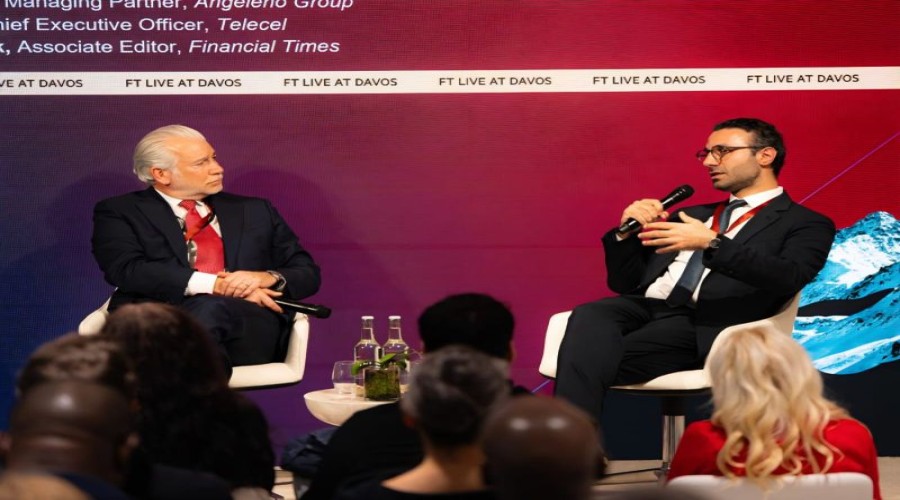
By: Nana Appiah Acquaye
Telecel
Group Chief Executive Officer, Moh Damush, has emphasized that the future of
global trade will be shaped less by physical infrastructure and more by data,
transparency, and shared digital systems. He made these remarks during a
Financial Times Live panel held on the sidelines of the World Economic Forum in
Davos.
The
discussion, moderated by Pilita Clark, Associate Editor at the Financial Times,
brought together industry leaders to examine how global trade is evolving in an
increasingly digital and interconnected world. Mr. Damush was joined on the
panel by Mohamad Al Thani and Daniel G. Weiss, with the conversation focusing
on the transformation of free zones and the growing role of advanced
technologies.

During
the session, Mr. Damush noted that free zones are rapidly moving beyond their
traditional role as logistics and warehousing hubs. He explained that they are
increasingly becoming digital trade ecosystems that enable businesses to
accelerate digitalization, enhance transparency, and operate more efficiently
across borders. This evolution, he said, is also laying the groundwork for a
future in which artificial intelligence can be deployed closer to the edge,
improving speed, responsiveness, and scalability in global trade operations.
He
also drew attention to the sustainability implications of digital growth,
noting that telecommunications networks account for approximately 1.5 percent
of global electricity consumption. In this context, he stressed that building
smarter, more energy-efficient, and sustainable digital infrastructure is no
longer solely an industry concern but a broader economic imperative.

The
panel underscored the growing convergence of trade, technology, and
sustainability, highlighting the critical role of telecom and digital
infrastructure providers in shaping resilient and inclusive global trade
systems. Telecel Group’s participation in the discussions reflects its
engagement in global policy and industry conversations on the future of digital
trade and sustainable connectivity.