By: Robert Annor
South
Africa’s Minister of Science, Technology and Innovation, Blade Nzimande, has
underscored the central role of basic education in driving the country’s
long-term science, technology and innovation agenda, drawing direct connections
between classroom learning and world-class scientific achievement.
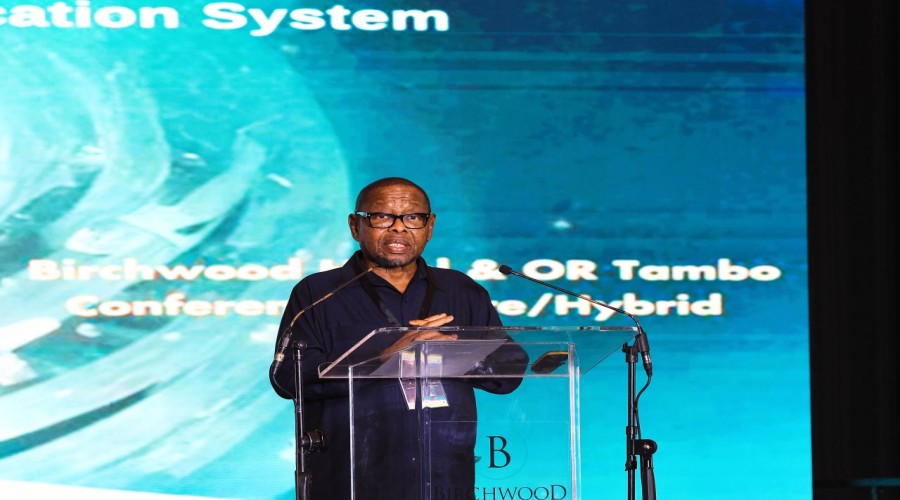
Addressing
the 2026 Basic Education Sector Lekgotla, Nzimande said foundational education
must serve as the pipeline into strategic national innovation priorities,
noting that South Africa’s global competitiveness depends on how early learners
are prepared for advanced scientific and technological fields.
He
highlighted astronomy as a key example, pointing to South Africa’s hosting of
major global infrastructure such as the Square Kilometre Array (SKA) and the
MeerKAT radio telescope. According to the minister, these assets should be
leveraged to inspire learners, particularly in the Northern Cape, and position
astronomy as a gateway into science, engineering and data-driven careers.
Mr.
Nzimande also drew attention to health innovation, citing the success of
initiatives such as the Nuclear Medicine Research Infrastructure (NuMeRI) and
Biovac’s vaccine manufacturing capabilities. He said these achievements
demonstrate South Africa’s standing as a serious global player in
high-technology health sciences and stressed the need to equip learners with
the skills required to enter and sustain such advanced industries.
On
skills development, the minister emphasized the urgency of moving away from
rote learning towards education models that promote problem-solving, analytical
thinking and adaptability. He said these competencies are essential to
preparing young people for participation in an increasingly AI-driven economy.
The
Minister concluded by reaffirming South Africa’s ambition to be an active
contributor to global innovation rather than a passive consumer of imported
technologies, stressing that this goal can only be achieved if basic education
is aligned with national science and innovation priorities from an early stage.