
NITDA briefs Permanent Secretary on 2026 implementation plans and digital transformation agenda
Date: 2026-01-15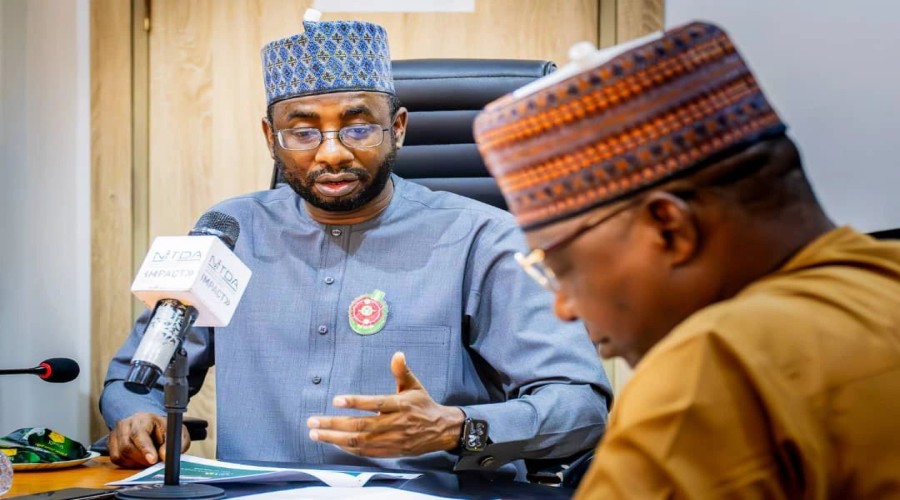
By: Nana Appiah Acquaye
The
National Information Technology Development Agency (NITDA) has briefed the
Permanent Secretary of the Federal Ministry of Communications, Innovation and
Digital Economy, Engr. Nadungu Gagare, on its transition into full
implementation mode for its 2026 initiatives.
The
briefing session, led by NITDA’s Director General, Kashifu Inuwa Abdullahi,
provided a strategic overview of the agency’s evolution since its establishment
in 2001 and reaffirmed its alignment with President Bola Ahmed Tinubu’s Renewed
Hope Agenda. Central to the discussion was NITDA’s Strategic Roadmap and Action
Plan 2024–2027 (SRAP 2.0), which is structured around eight strategic pillars
designed to drive inclusive economic growth and accelerate Nigeria’s digital
transformation.

During
the engagement, NITDA highlighted key performance milestones achieved in recent
years. These included progress in digital literacy and talent development
through initiatives such as the 3 Million Technical Talent (3MTT) programme,
improvements in Nigeria’s global artificial intelligence ranking from 85th to
69th, and the completion of the National Artificial Intelligence Strategy.
The
agency also provided updates on policy and regulatory achievements, including
efforts in cloud sovereignty, data localisation, electronic invoicing, and
strengthened cybersecurity collaboration with the Office of the National
Security Adviser. Additional milestones discussed were the launch of the
National Digital Trust Map Portal and the ongoing implementation of the
Nigerian Startup Act through startup labelling and broader ecosystem support.

Operational
and financial matters formed a key part of the briefing, with NITDA reporting
compliance with all statutory and fiscal obligations, as well as continuous
reporting to relevant oversight bodies. The engagement underscored the agency’s
readiness to advance its 2026 programmes and deepen its contribution to
Nigeria’s digital economy agenda.


