By: Nana Appiah Acquaye
India
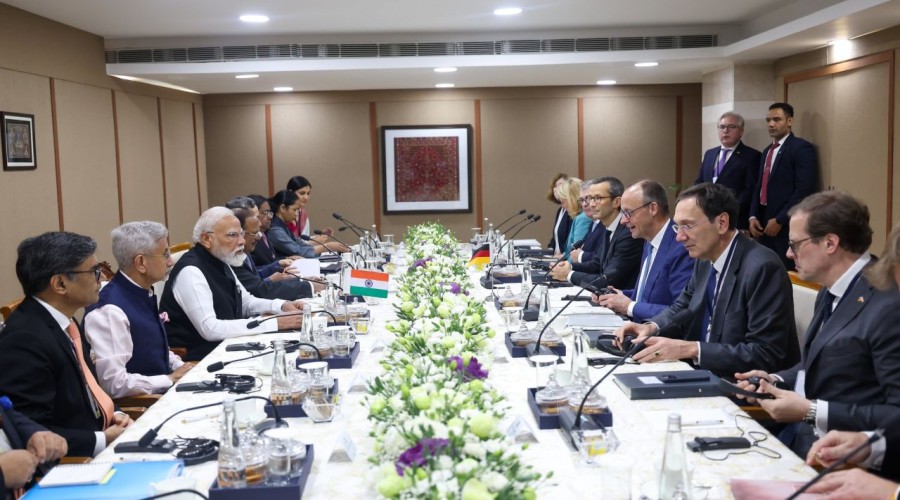
and Germany have agreed to further strengthen their strategic partnership in
science, research and higher education, following German Chancellor Friedrich
Merz’s first official visit to India and South Asia this week.
The
visit marks a significant milestone in India–Germany relations, building on 75
years of diplomatic ties and five decades of sustained cooperation in science,
research and academic exchange. Both countries reaffirmed their commitment to
deepening collaboration as part of a broader effort to advance innovation-led
growth and technological development.
As
part of the renewed engagement, India and Germany signed an Indo-German Higher
Education Roadmap aimed at streamlining and reinforcing institutional
cooperation between universities and research institutions in both countries.
The roadmap is expected to enhance academic partnerships, joint research
programmes and student and researcher mobility.
The
two sides also announced the establishment of an Indo-German Centre of
Excellence on Innovation, which will serve as a formal platform to promote
technology transfer, support start-ups and strengthen collaboration between
academia, industry and innovation ecosystems.
In
addition, both countries expressed continued interest in expanding cooperation
in critical and emerging technologies. Areas identified for deeper engagement
include semiconductors, critical minerals, artificial intelligence,
digitalization, telecommunications, health technologies, the bioeconomy,
hydrogen, and battery storage. Several bilateral agreements were announced to
support collaboration across these priority sectors.
Institutions
such as the DAAD Deutscher Akademischer Austauschdienst and the German Centre
for Research and Innovation (DWIH) New Delhi continue to play a key role as
advisors and facilitators of researcher mobility, academic collaboration and
innovation programmes, contributing to the growing depth of Indo-German
academic and research relations.