
ASES impressed with AI and earth observation training for Senegalese students
Date: 2026-01-08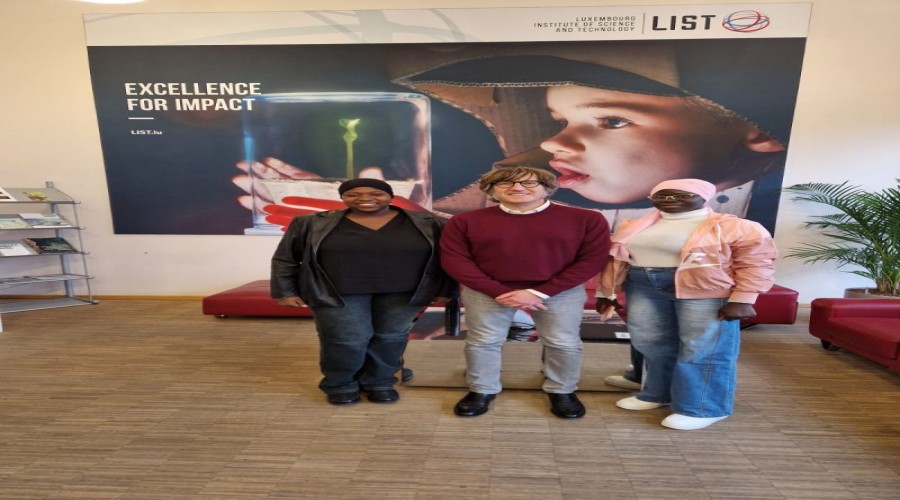
By: Nana Appiah Acquaye
The
Agence sénégalaise d’études spatiales (ASES) has reported positive outcomes
from the participation of two Senegalese students in the training programme
titled “Introduction to AI for Earth Observation,” organised in partnership
with the Luxembourg Institute of Science and Technology (LIST) and funded by
the Luxembourg Cooperation.
The
week-long programme immersed participants in emerging technologies applied to
Earth observation, with a focus on satellite image processing, introductory
concepts in machine learning and deep learning, and the use of advanced
analytical tools for Earth observation data. The training also included
practical sessions based on real-world use cases linked to environmental
monitoring, agriculture, and climate-related challenges.

According
to ASES, beyond the technical competencies acquired, the programme deepened the
students’ understanding of the strategic importance of artificial intelligence
in enhancing the value of spatial data for sustainable development. The
participants also benefited from close supervision by experts, interactions
with international researchers, and exposure to a high-level scientific and
research environment.
ASES
noted that the initiative aligns with its broader strategy to strengthen human
capital and build national expertise in critical areas of space science and
innovation. The agency views capacity building as a cornerstone of Senegal’s
long-term ambitions in the space sector.

The
Director General of ASES, Maram Kaire, expressed appreciation to the Luxembourg
Institute of Science and Technology for the quality of the training, as well as
to LuxDev and the Luxembourg Cooperation for their continued support. He also
commended USSEIN and the participating students for representing Senegal with
commitment and excellence.
ASES
indicated that in 2026 it will continue to expand specialised training
opportunities for Senegalese youth, with the objective of developing a skilled,
innovative and forward-looking national space workforce.


