GMet collaborates Ghana Red Cross on Climate Atlas to strengthen disaster preparedness
Date: 2026-01-08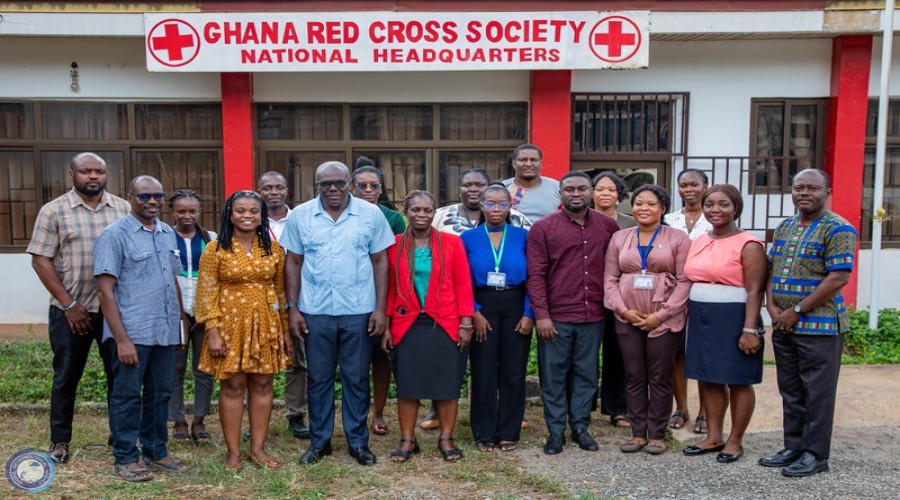
By: Nana Appiah Acquaye
The
Ghana Meteorological Agency (GMet), in collaboration with the Danish
Meteorological Institute (DMI) and the Embassy of Denmark in Ghana, has held a
stakeholder engagement with the Ghana Red Cross Society as part of preparations
toward the rollout of the Ghana Climate Atlas.
The
working session brought together members of the Climate Atlas technical and
communications teams and the leadership of the Ghana Red Cross Society, led by
its Secretary General, Eric Gregory Kwatia. Senior programme, disaster
management, health and climate focal persons from the Red Cross also
participated in the discussions.

Speaking
during the engagement, the Principal Meteorologist and External Relations
Officer at GMet, Maureen Abla Ahiataku, who also serves as the Climate Atlas
Project Lead, underscored the distinctiveness of the Ghana Climate Atlas. She
explained that unlike many global climate tools, the Atlas is grounded in
Ghana’s own observed climate data, which is integrated with global climate
models to produce more accurate, localized projections.
According
to her, this approach enables the downscaling of climate projections and
correction of model biases, ensuring that the information reflects Ghana’s
diverse microclimates and real community-level impacts rather than broad
regional trends. She noted that the Atlas is designed to bridge the gap between
scientific climate projections and practical decision-making for disaster
preparedness, humanitarian response, policy formulation and community
interventions.
The
presentation demonstrated how the Atlas offers insights across multiple
emissions scenarios and time horizons, helping institutions anticipate risks
such as flooding, extreme heat and rainfall variability. Participants were
informed that the tool is intended to support proactive planning and
anticipatory action, rather than reactive responses after climate-related
disasters occur.
Welcoming
the GMet delegation, Mr. Kwatia described the engagement as timely, stressing
that climate change continues to amplify humanitarian risks across Ghana. He
emphasized that effective disaster risk reduction depends on access to
reliable, timely and clearly communicated climate information, adding that the
Red Cross’s nationwide volunteer network plays a critical role in translating
technical data into practical action at the community level.
Discussions
during the session explored how the Ghana Climate Atlas could support areas
such as anticipatory action, food security planning, public health
interventions and the management of climate-induced migration risks.
Participants highlighted the need to align climate data with humanitarian
decision-making frameworks and to communicate information in formats that are
easily understood and actionable for communities.

The
meeting concluded with a shared commitment to strengthen collaboration through
formal partnerships, data-sharing arrangements and continued engagement as the
development of the Atlas progresses.
The
Ghana Climate Atlas is being developed under the Ghana–Denmark Strategic Sector
Cooperation Programme as an interactive, online climate information platform.
By combining historical climate observations, future projections and spatial
analysis tools tailored to Ghana’s context, the Atlas is expected to support
decision-making across sectors including disaster risk reduction, agriculture,
water resources, energy, health and infrastructure.
GMet
and its partners are currently validating the Atlas with key stakeholders to
ensure it is practical, relevant and responsive to the needs of institutions
working directly with communities ahead of its official launch.


