
Clean Cooking Alternative Financing Project launched in Addis Ababa
Date: 2026-01-02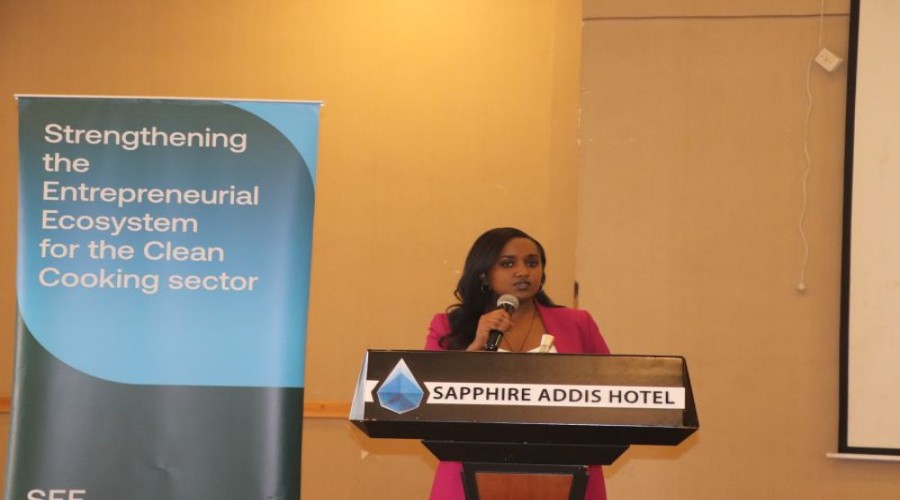
By: Robert Annor
The
Clean Cooking Alternative Financing Project (CCAFP) has officially been
launched in Addis Ababa, marking a significant step toward expanding access to
affordable clean cooking solutions in Ethiopia. The launch event, held at the
Sapphire Hotel, brought together stakeholders from the public and private
sectors, development partners, and clean energy practitioners.
The
project is being implemented by eQub Financial Technologies in partnership with
the Netherlands Enterprise Agency (RVO), with strong support from the SEE–Clean
Cooking HTCC Ethiopia project, which has backed the initiative since its
inception. The CCAFP aims to address financing barriers that limit the adoption
of clean cooking technologies, particularly among low-income households and
small and medium-sized enterprises.

Delivering
the keynote address, Haimanot Berta, SEE–Clean Cooking Component HTCC Project
Coordinator, underscored the critical role of access to finance, private sector
participation, and innovative financing mechanisms in accelerating the
transition to clean cooking solutions across Ethiopia. She emphasized that
sustainable adoption depends on aligning financial inclusion with technology
deployment and market development.
A
second keynote address was delivered by Alexander Hizikias, Co-Founder and
Chief Executive Officer of eQub Financial Technologies, who outlined the
company’s vision to scale inclusive clean cooking solutions through digital
innovation. He highlighted eQub’s use of a digital in-kind eQub financing
model, which enables households and small businesses to access electric cooking
appliances through flexible collective payment schemes.
Under
the CCAFP, this financing approach is designed to make electric cooking
technologies more affordable, particularly for low-income communities and local
merchants, while promoting financial inclusion and supporting the growth of
clean cooking markets. The model allows users to acquire stoves and related
equipment through structured group-based payments, reducing upfront costs and
financial risk.

The
launch event also featured a panel discussion that examined key barriers and
enablers to clean cooking adoption, including rural accessibility,
user-centered product design, affordability, and risk-sharing financial
instruments for both consumers and suppliers. Local merchants participating in
the project showcased verified electric cooking products, demonstrating the
readiness of small businesses to scale clean cooking solutions in the Ethiopian
market.
The
SEE–Clean Cooking HTCC project, which has played a central role in supporting
the initiative, is coordinated by RVO in partnership with the Energising
Development (EnDev) programme and implemented by GIZ and SNV. The project is
carried out on behalf of the Ministry of Foreign Affairs of the Netherlands and
the European Union, reflecting continued international support for clean energy
access and sustainable development in Ethiopia.


