Djibouti positions digital transformation as a core pillar of national development
Date: 2025-12-20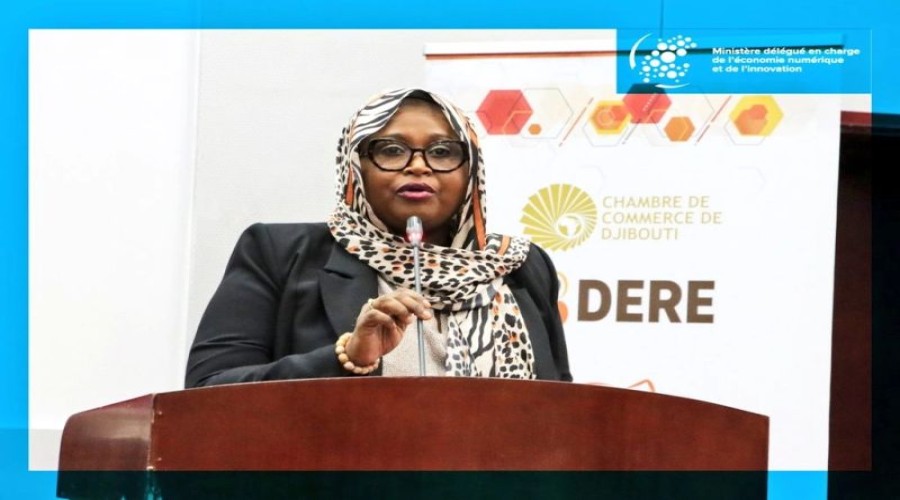
By: Kanto Kai Okanta
Djibouti
has reaffirmed its commitment to technology-driven economic and social
transformation, with digitalisation framed as a strategic national priority
rather than a discretionary policy choice. This message was delivered by Mariam Hamadou Ali, Minister Delegate in
charge of the Digital Economy and Innovation, during the Conference on
Technology and Innovation organised by the think tank DERE, where she served as
keynote speaker.

Opening
a session dedicated to the role of digital technology in development, the
Minister underscored that digital transformation sits at the heart of
Djibouti’s Smart Nation vision and represents a long-term, structuring project
for the country. She highlighted several reforms and initiatives already
undertaken by the government to create an enabling digital ecosystem, including
the adoption of the Digital Code to strengthen trust and security, and the
implementation of the Startup Act to support innovation and entrepreneurship.
The
Minister also pointed to ongoing efforts in skills development, open data, and
artificial intelligence, alongside a digital governance framework focused on
inclusion, sovereignty, and measurable impact. She emphasised that meaningful
digital transformation cannot be imposed unilaterally, but must be built
through collective action involving public institutions, startups, the private
sector, experts, and the Djiboutian diaspora.

Concluding
her remarks, Ms. Mariam Hamadou Ali stressed that training, innovation,
security, and decisive action are central to Djibouti’s ambition to leverage
digital technologies for sustainable economic growth, social progress, and
institutional development.
Leave Your Comments
Trending News