
Egypt successfully launches SPNEX Nano-Satellite, advancing scientific research in space
Date: 2025-12-15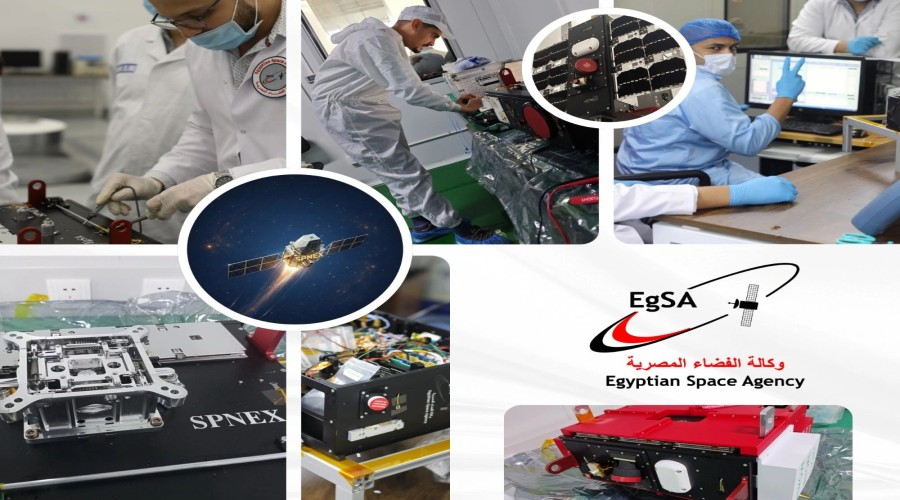
By: Nana Appiah Acquaye
The
Egyptian Space Agency has announced the successful launch of the SPNEX
satellite, marking its entry into the designated orbit and the initiation of
its first signal transmissions. The launch represents a significant milestone
in Egypt’s nano-satellite development program, demonstrating the country’s
capacity to progress from design and implementation to testing and full
operational deployment in space.
SPNEX
is a scientific laboratory in orbit, developed within the framework of
cooperation between the Egyptian Space Agency and the Academy of Scientific
Research and Technology. The nano-satellite is designed to measure plasma
characteristics in the ionospheric layers, providing critical data to support
scientific research.

The information collected by SPNEX will help develop accurate models of ionospheric characteristics, particularly over North Africa and the Arab region. It will also support studies on the effects of solar and geomagnetic storms on satellite networks and contribute to climate-related research, linking space science to technological infrastructure on Earth.
The
design and manufacturing of SPNEX began in the first quarter of 2022, with
development conducted entirely within the laboratories of the Egyptian Space
Agency. Assembly, integration, and testing operations were completed at the
Agency’s AIT Center within the Egyptian Space City. The launch marks the start
of a new phase of precise scientific work in orbit, reinforcing Egypt’s growing
capabilities in space technology and research.