IFC hails Ghana’s progress in green building training and certification at DfGE close-out event
Date: 2025-12-15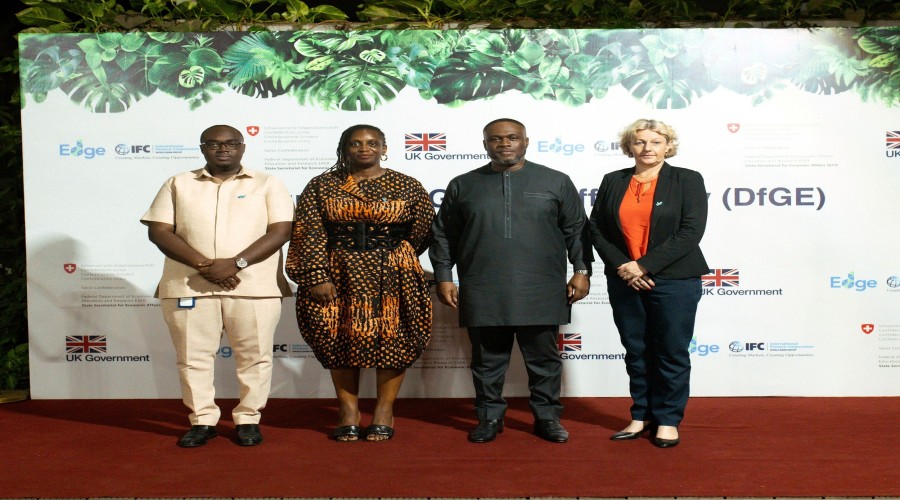
The International Finance Corporation (IFC), a member of the World Bank Group, today celebrated the successful close-out of the Designing for Greater Efficiency (DfGE) programme in Ghana, marking a significant step forward in the country’s transition toward low-carbon, resource-efficient buildings.
Implemented by IFC with funding from the Swiss State Secretariat
for Economic Affairs (SECO), the three-year programme has delivered exceptional
results across universities, professional associations, technical institutes
and the wider construction ecosystem

Hon.
Kenneth Adjei, Minister of Works and Housing delivering the keynote address at
the event
Since its launch in 2022, the DfGE programme has strengthened technical expertise in sustainable building design, supported curriculum adoption, and expanded climate literacy among Ghana’s next generation of architects, engineers and construction professionals. Ghana has emerged as one of the strongest performers among the five DfGE countries, alongside Colombia, Peru, Indonesia and South Africa.
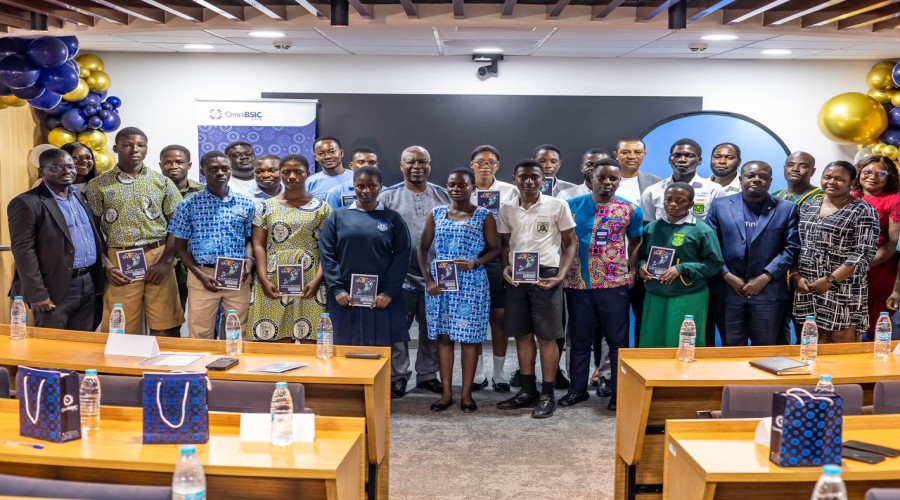
Through DfGE, five universities, one professional association, and
one technical institute have integrated green building training into their
programmes. A total of 30 trainers were prepared to deliver the curriculum,
while 254 students and professionals successfully completed the course. Of this
number, 67 women participated, reflecting increasing gender inclusion in a
sector traditionally dominated by men.
Beyond classrooms, the programme engaged over 870 participants
through nationwide workshops, awareness activities, and three zero-carbon
design competitions. IFC has confirmed that the DfGE online course, updated to
align with the latest global EDGE standards, will remain accessible beyond the
programme’s close-out to ensure continuity of knowledge and long-term sector
impact.
“Ghana’s implementation has been nothing short of remarkable. The
sustained interest across universities, professional bodies and industry
demonstrates the country’s readiness to scale green building practices. The
skills developed through DfGE will support Ghana’s transition to a low-carbon
future while creating opportunities for innovation, jobs and climate-smart
growth,”
Yewande Giwa, IFC Senior Country Officer.
At the event held in Accra last week, IFC also announced that Ghana
has surpassed 1 million square metres of EDGE-certified green building space,
the highest in West Africa. More than 81 projects across residential,
commercial and public facilities have attained certification, reflecting
growing market demand for energy-efficient, water-saving and climate-resilient
buildings.
According to Paul Ocran, IFC Green Building Lead for Ghana, this
milestone positions Ghana as the sub-region’s leader in green construction. “EDGE
has helped demonstrate that efficient, climate-responsive buildings are
financially viable and technically feasible. Ghana’s achievement sends a clear
signal that the market is shifting decisively toward sustainability,” he
said.
Representing SECO, Magdalena Wüst, Head of Cooperation, praised
Ghana’s leadership and the strong uptake of the DfGE curriculum. “Switzerland
is proud to have supported a programme that empowers students, faculty and
practitioners with the skills to design and deliver low-carbon buildings,”
she said. “This is not the end, but the beginning of deeper innovation and
sustainable growth.”

Yewande Giwa, IFC Senior Country Officer speaking at the event
Testimonials from educators, students and practitioners highlighted
how the DfGE course has transformed technical capacity, strengthened climate
literacy, and positioned young professionals to drive Ghana’s green building
movement forward.
In his keynote remarks, Hon. Kenneth Gilbert Adjei, Minister for
Works, Housing and Water Resources, reiterated the government’s commitment to
embedding sustainability in national housing and construction policies. He
stated that buildings contribute significantly to global energy use and
emissions and stressed the need for Ghana to adopt more resilient,
resource-efficient models as urbanisation accelerates.
The Minister commended IFC and SECO for their “visionary support”
and reaffirmed that the Ministry will continue working closely with industry,
academia and development partners to scale sustainable solutions. “Tonight
marks the beginning of a movement. The expertise cultivated here will shape
Ghana’s built environment for decades to come,” he said.
With the successful close-out of the DfGE programme, Ghana now has
a strengthened ecosystem of trained professionals, updated academic curricula,
and growing private-sector adoption of green building practices. IFC will
continue to collaborate with the government and sector stakeholders to expand
climate-smart investment and support the transition to a resilient, low-carbon
construction sector.