Ghana adopts UNESCO AI readiness assessment to strengthen ethical AI governance
Date: 2025-11-29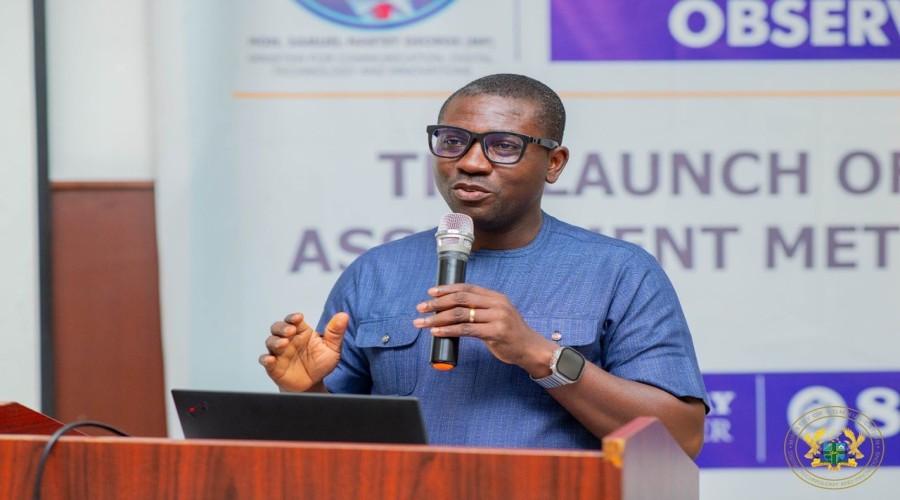
By: Nana Appiah Acquaye
Ghana
has launched the UNESCO Artificial Intelligence Readiness Assessment
Methodology (RAM), marking a major step toward building a responsible,
inclusive and ethical framework for AI deployment in the country. The
initiative, supported by the European Commission through UNESCO, convened
representatives from government, academia, civil society and the private sector
to examine Ghana’s AI landscape and governance structures.

In
remarks delivered on behalf of the Minister of Communication, Digital
Technology and Innovation, Hon. Samuel Nartey George, the Director for ICT, Dr.
Samuel Antwi Gyekyi, reaffirmed Ghana’s commitment to developing and deploying
AI safely and transparently. He said AI can accelerate progress in health,
education, climate action and other priority areas tied to the Sustainable
Development Goals, while cautioning that risks such as algorithmic bias,
privacy concerns and job displacement must be addressed through strong
oversight.
The
UNESCO RAM will enable Ghana to assess its institutional capacity, regulatory
environment, skills ecosystem and digital infrastructure to determine national
readiness for AI adoption. Findings will guide the formulation of Ghana’s
National AI Strategy and support the design of more robust governance
frameworks.
Speaking
on behalf of UNESCO’s Representative to Ghana, Edmond Moukala, Carl Ampah
underscored the centrality of ethics in AI development. He said AI’s potential
to transform sectors including healthcare, education, culture and governance
must be anchored in fairness, human rights and the prevention of systemic
biases.

The
RAM provides a comprehensive framework for evaluating a country’s preparedness
for sustainable and ethical AI integration, examining policy, technical, human
resource and societal dimensions.
Emmanuel
Ofori, Director of Innovations at the Ministry of Communication, Digital
Technology and Innovation, stressed the need for national AI plans to align
with global ethical standards and for stronger collaboration among government,
industry, academia and civil society. He said these partnerships will be
critical in building a trustworthy AI ecosystem that benefits all Ghanaians.