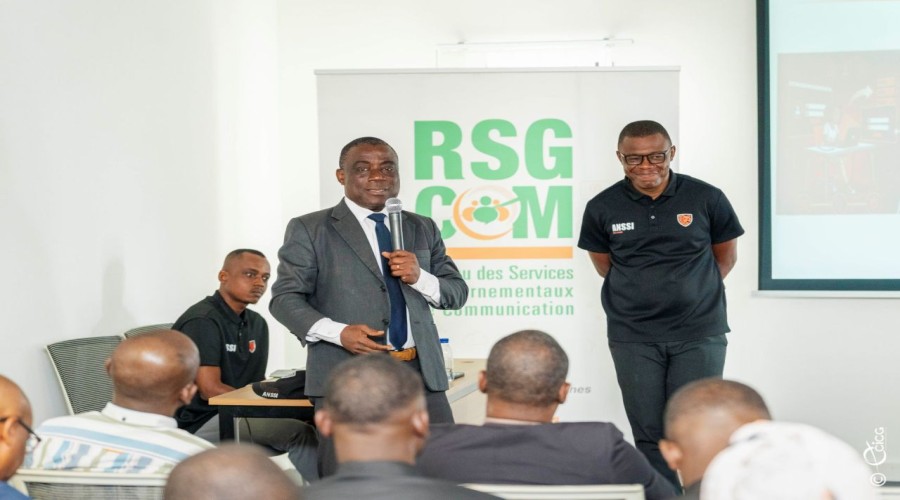
GMet Director-General presents Ghana’s early warnings progress at COP30 side event hosted by Senegal
Date: 2025-11-24
By: Nana Appiah Acquaye
The
Ghana Meteorological Agency (GMet) has presented the country’s progress under
the Early Warnings for All (EW4All) initiative during a COP30 side event hosted
by Senegal, with Director-General Dr. Eric Asuman outlining key achievements
and challenges in strengthening national early warning systems.
The
session, held at the Senegal Pavilion, gathered meteorological leaders from
Senegal, Ivory Coast and Ghana to exchange perspectives on improving
coordinated, people-centred early warning services across West Africa.
Dr.
Asuman said Ghana’s implementation of EW4All is anchored in strong
collaboration among national institutions across the initiative’s four pillars,
emphasizing that effective early warning systems depend on seamless
coordination from data collection to the end users who must act on the
information.

A
major focus of his remarks was the call for National Meteorological and
Hydrological Services (NMHSs) to be granted institutional autonomy. He said
autonomy would enable NMHSs to develop financial independence, expand
revenue-generating services and reinvest in critical forecasting and climate
information systems.
Drawing
from Ghana’s experience, Dr. Asuman identified five areas requiring urgent
attention to strengthen national early warning capabilities: expanding
observation networks, building technical and institutional capacity, securing
sustainable and predictable funding, reinforcing legislation and governance,
and mainstreaming climate information across key socio-economic sectors.

The
event, moderated by Dr. Aïda Diongue Niang of Senegal’s ANACIM, also featured
contributions from His Excellency Jean-Louis Moulot of Ivory Coast’s SODEXAM
and representatives from Senegal’s meteorological services. Speakers
underscored shared regional priorities, including deeper cooperation, stronger
institutional capacity and improved forecasting systems to better protect
communities from escalating climate-related risks.
Leave Your Comments
Trending News