By: Nana
Appiah Acquaye
Morocco's Ministry of
Digital Transition and Administrative Reform has signed a Memorandum of
Understanding (MoU) with global critical digital infrastructure provider Vertiv
to strengthen cooperation on digital infrastructure, cloud computing,
artificial intelligence and sovereign data centre development.
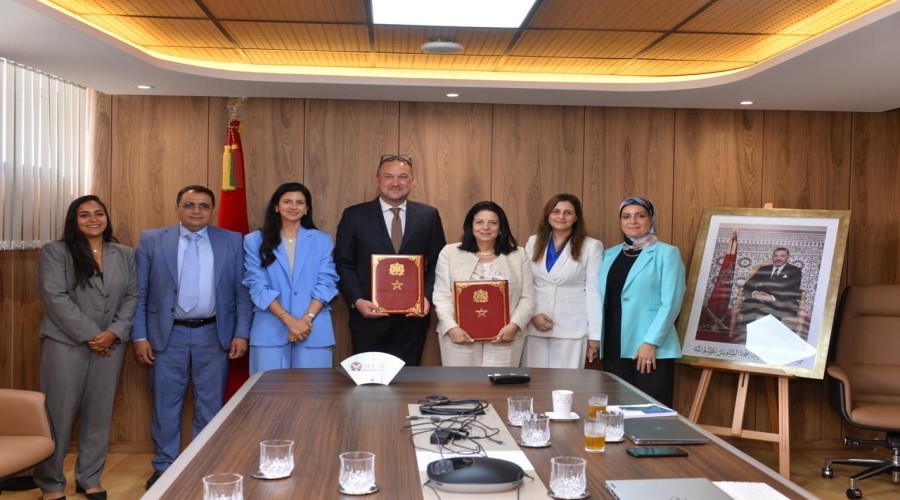
The agreement was signed in
Rabat by the Minister of Digital Transition and Administrative Reform, Ms. Amal
El Fallah Seghrouchni, and Vertiv Africa Managing Director, Mr. Wojtek Piorko,
in the presence of Vertiv's Regional Director for Northwest Africa, Ms. Zineb
Kamri.
The partnership establishes
a framework for collaboration and knowledge exchange in the development of
critical digital infrastructure, cloud technologies, artificial intelligence,
high-performance computing, data centres, and the electrical and cooling systems
required to support these technologies.
Speaking at the signing
ceremony, Ms. El Fallah Seghrouchni described digital infrastructure as a
cornerstone of Morocco's technological sovereignty and a key enabler of
artificial intelligence, innovation, digital economic growth and the
modernization of public services.
She said the partnership
aligns with the implementation of Morocco's Digital Morocco 2030 strategy, the
"AI Made in Morocco" roadmap and the national cloud development
roadmap for 2025–2030, all aimed at accelerating the country's digital transformation.
Under the memorandum, the
two parties will collaborate on technical studies, exchange expertise, identify
strategic digital infrastructure projects and explore innovative solutions to
address Morocco's future digital requirements.
The agreement will also
support ongoing planning for the proposed 50-megawatt sovereign data centre in
Rabat, a strategic project designed to expand Morocco's sovereign cloud
capabilities, strengthen the hosting of digital public services, enhance artificial
intelligence and high-performance computing capacity, and improve national
cybersecurity resilience.