By:
Robert Kwaku Annor
Morocco’s Minister of
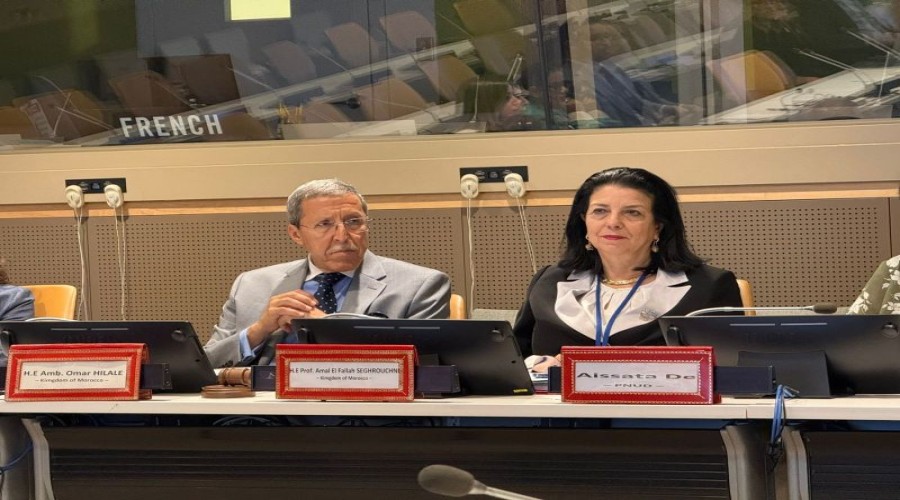
Digital Transition and Administrative Reform, Amal El Fallah Seghrouchni, has
chaired the inaugural meeting of the Advisory Board of the Digital for
Sustainable Development (D4SD) Hub, marking a key milestone in efforts to
accelerate digital transformation across Africa and the Arab States.
The meeting, held at the
United Nations Headquarters in New York on 24 June 2026, was organized in
partnership with the United Nations Development Programme (UNDP) on the
sidelines of the United Nations Open Source Week 2026.
The D4SD Hub is a regional
initiative jointly supported by the Kingdom of Morocco and UNDP, aimed at
strengthening digital transformation efforts through collaboration among
governments, international organizations, academia, research institutions,
development agencies, and the private sector.
The inaugural advisory
session brought together representatives from multiple stakeholder groups to
define strategic priorities for advancing inclusive and sustainable digital
development in the region.
Opening the meeting,
Minister Seghrouchni emphasized the symbolic importance of the gathering,
noting Morocco’s co-organization of the United Nations Open Source Week 2026
alongside the United Nations Office for Digital and Emerging Technologies and
the United Nations Office of Information and Communication Technology.
She underscored that digital
transformation has become one of the most important drivers of sustainable
development, while cautioning that its benefits remain unevenly distributed
across countries and regions.
According to the Minister,
emerging technologies such as artificial intelligence, digital public
infrastructure, and advanced data governance systems present both significant
opportunities and complex challenges. She stressed that the priority must be to
convert technological progress into tangible, inclusive, and trust-based
development outcomes.
Seghrouchni also highlighted
the importance of achieving digital sovereignty, stating that it cannot be
sustained without parallel progress in scientific and technological
sovereignty. She emphasized the need for strong national ecosystems built on
research, innovation, skills development, and investment in human capital.
She further noted that the
future of artificial intelligence will depend not only on access to technology
but also on countries’ ability to generate knowledge, develop local models,
manage quality data, train skilled professionals, and sustainably finance
research and innovation.
The establishment of the
D4SD Hub Advisory Board is expected to strengthen coordination among regional
and international partners and support the development of practical frameworks
for inclusive digital transformation across Africa and the Arab world.