By:
Nana Appiah Acquaye
Speakers
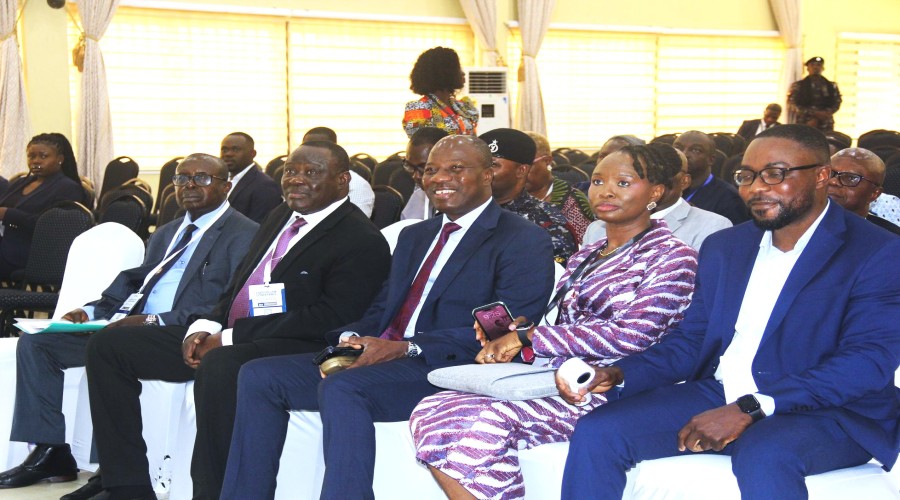
at the official launch of the Annual Labour Law Conference have called for
urgent reforms to Ghana's labour laws to address the growing realities of
digital labour, platform-based work and the future of employment.
The
conference, held on the theme "Navigating the Frontiers of Digital
Labour in Ghana: Law, Policy and the Future of Work," brought
together lawmakers, judges, labour experts, academics and practitioners to
examine the legal and policy implications of the rapidly expanding digital
economy.
Delivering
the keynote address as Special Guest of Honour, Majority Leader and Member of
Parliament for Bawku Central, Hon. Mahama Ayariga, said technological
innovation and the expansion of digital platforms had fundamentally altered
traditional employment relationships, exposing significant gaps in Ghana's
labour regulatory framework.
He
noted that increasing numbers of young Ghanaians are earning livelihoods
through ride-hailing services, online freelancing, remote work and other
digital platforms, but often do so without adequate legal protections.
According
to him, many platform workers operate without employment contracts, health
insurance, pension contributions or access to effective dispute resolution
mechanisms.
Using
the example of a ride-hailing driver whose account was allegedly suspended
through an automated system without any opportunity for appeal, Mr. Ayariga
argued that digital workers frequently find themselves in a legal grey area
because they are classified as independent contractors rather than employees.
He
observed that Ghana's Labour Act, 2003 (Act 651), was enacted more than two
decades ago and does not adequately address the complexities associated with
digital work and algorithmic management.
The
Majority Leader proposed a three-pronged legislative approach to address the
challenge. He called for amendments to the Labour Act or the enactment of a
standalone Digital Employment Act to properly classify and protect platform
workers.
He
also advocated mandatory contributions by digital platforms towards social
security and healthcare schemes for workers operating on their platforms, as
well as legislation requiring transparency in the use of algorithms that
determine worker ratings, performance assessments and account suspensions.
Mr.
Ayariga further stressed the need for legal mechanisms that would enable
Ghanaian workers to seek redress locally when their rights are violated by
digital platforms, many of which include foreign jurisdiction clauses in their
contracts.
He
urged Parliament to strengthen labour institutions, including the Ministry of
Employment and Labour Relations, the National Labour Commission (NLC) and
labour inspectorates, through increased budgetary allocations and improved
technological capacity to regulate digital work effectively.
"Technology
should not become a tool for worker exploitation but rather an instrument for
shared prosperity," he said.
Acting
Chief Justice Gabriel Scott Pwamang also underscored the importance of judicial
adaptation to emerging forms of employment.
He
noted that while Ghana's legal framework contains provisions relating to
employment and labour rights, the judiciary has yet to fully confront the legal
complexities presented by platform-based work and the gig economy.
Justice
Pwamang warned that even where legislative reforms are introduced, courts must
be prepared to interpret and apply the law within the context of changing
employment realities.
He
cited judicial decisions that have established employers' obligations to
justify employee terminations and questioned how such principles would apply in
situations where the identity of an employer becomes difficult to determine
within digital labour arrangements.
According
to him, workers whose livelihoods are controlled by digital platforms should
not be left without legal protection simply because traditional definitions of
employment do not neatly apply to their circumstances.
He
commended the formation of the Labour Law Society of Ghana and encouraged the
organization to expand its research beyond digital labour to include broader
labour issues such as occupational health and safety.
Justice
Kwabena Asuman-Adu (Rtd), Chairperson of the National Labour Commission,
described digital labour as one of the most significant developments shaping
modern employment globally.
He
explained that digital labour encompasses online freelancing, remote work,
ride-hailing services, delivery platforms and other forms of technology-enabled
work that are increasingly managed through algorithms rather than direct human
supervision.
Justice
Asuman-Adu noted that while digital platforms have created new employment
opportunities, particularly for young people, they have also generated concerns
about unstable incomes, inadequate social protection and unclear employment
relationships.
He
said the Labour Act currently presumes a direct contractual relationship
between employer and employee, making it difficult to accommodate platform
workers whose relationships with digital companies are often structured
differently.
The
NLC Chairperson observed that platform companies frequently characterize
themselves as intermediaries rather than employers, thereby avoiding
obligations associated with traditional employment relationships.
He
pointed out that this classification often excludes workers from minimum wage
protections, paid leave, social security benefits and collective bargaining
rights.
Justice
Asuman-Adu referenced previous judicial decisions that emphasize the importance
of examining the substance of employment relationships rather than relying
solely on contractual labels.
He
argued that many digital workers may, in reality, be employees operating under
different designations.
Calling
for reforms, he urged government to revisit efforts to review the Labour Act
and incorporate provisions addressing digital labour and the digital economy.
He
also advocated the extension of social protection schemes, including pension
and health insurance coverage, to platform workers.
Additionally,
he recommended the adoption of fair work standards that promote fair pay,
transparency and decent working conditions across digital platforms.
Participants
at the conference agreed that while digital technologies continue to create
economic opportunities, the legal and regulatory framework must evolve to
ensure that workers are not left vulnerable in the changing world of work.
The
conference forms part of ongoing efforts by labour law practitioners and
stakeholders to shape policy discussions around the future of work in Ghana and
develop legal solutions that balance innovation with worker protection.