Project Giga advances connectivity agenda in Sierra Leone
Date: 2026-04-30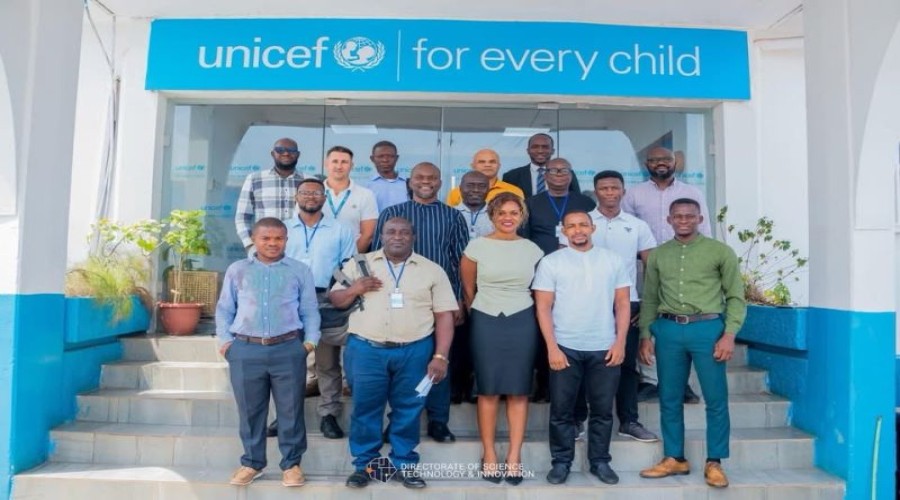
By: Robert Kwaku Annor
The
Directorate of Science, Technology and Innovation (DSTI), in collaboration with
UNICEF Sierra Leone and key partners, has convened a high-level review meeting
at UNICEF headquarters in Freetown to assess progress under Project Giga and
define the next phase of implementation aimed at expanding nationwide digital
connectivity.
The
engagement brought together representatives from the National
Telecommunications Authority (NATCA), Zoodlabs SL, the Ministry of
Communication, Technology and Innovation, and the Ministry of Basic and Senior
Secondary Education. Discussions focused on strengthening coordination
mechanisms, accelerating infrastructure rollout, and aligning policy frameworks
to support equitable access to digital services.

Project Giga, which is deploying solar-powered internet connectivity to selected schools, has already connected several institutions, with stakeholders reviewing performance outcomes and identifying gaps required to scale the initiative across all targeted learning environments. The initiative is positioned as a key pillar in Sierra Leone’s broader digital transformation agenda, with emphasis on bridging connectivity gaps in underserved areas.
A
central component of the meeting was the presentation of a commercial
sustainability model exploring blended financing approaches, private sector
participation, and cost-recovery mechanisms designed to reduce long-term
dependency on donor funding. The model aims to ensure that digital
infrastructure investments remain viable while expanding coverage.

While
the current phase of Project Giga is largely terrestrial and solar-enabled,
stakeholders also noted the growing importance of satellite-based connectivity
solutions as a complementary layer for extending broadband access to
hard-to-reach and remote communities. Satellite systems were highlighted as a
strategic enabler for national resilience, particularly in areas where fibre
deployment remains economically or geographically constrained.
Technical challenges identified during implementation will be addressed through the project’s Technical Working Group, which is expected to refine deployment standards and operational coordination.
Moving
forward, the initiative will place greater emphasis on local research capacity
and increased engagement with domestic internet service providers to ensure
that connectivity models reflect local operational realities and long-term
sustainability needs.