MWC25 Kigali: UNICEF and GSMA launch Africa Taskforce on Child Online Protection
Date: 2025-10-23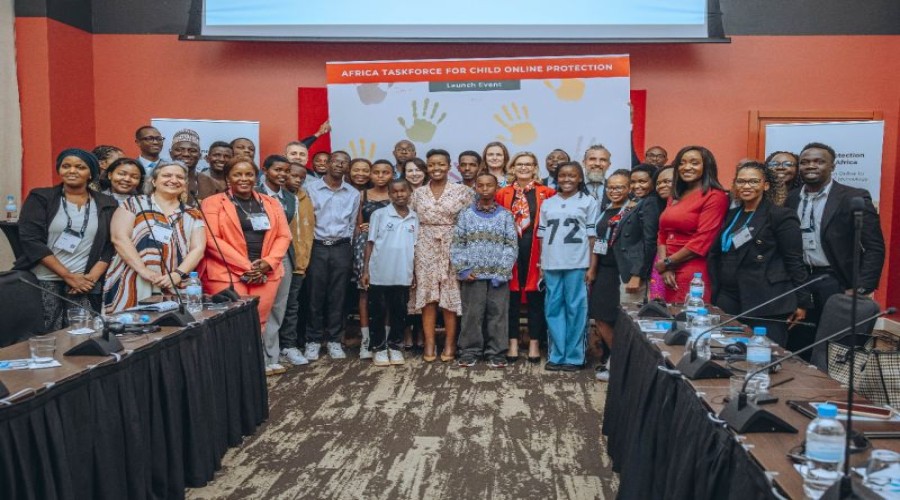
UNICEF and the GSMA have launched the Africa Taskforce on Child Online Protection (COP), a first-of-its-kind multi-stakeholder platform designed to strengthen children’s safety, rights, and wellbeing in the digital age. The initiative was officially unveiled during the ongoing Mobile World Congress 2025 (MWC25) in Kigali, Rwanda.
The Taskforce will coordinate and advance child online protection efforts across Africa, building national and regional capacity to safeguard children in an increasingly digital world. It follows the release of the GSMA’s June 2025 whitepaper, Enhancing Child Online Protection in Sub-Saharan Africa, developed in partnership with UNICEF and regional stakeholders, which called for stronger collaboration among governments, industry, and civil society to create safer online environments for children.
With
Africa recording one of the fastest rates of internet adoption among children
globally, the risks of cyberbullying, exploitation, misinformation, and
exposure to harmful content have also increased. The Taskforce aims to address
these challenges by promoting an African-led approach to digital safety that
reflects the continent’s diverse realities and rapid technological growth.

“As
Africa’s children step boldly into the digital world, their safety must come
first,” said Etleva
Kadilli, UNICEF Regional Director for Eastern and Southern Africa. “The
Africa Taskforce on Child Online Protection is a uniquely African platform to
ensure technology shields children from harm while opening doors to learning,
play, and growth.”
Caroline
Mbugua, Director of Public Policy at GSMA Africa, emphasized that the
initiative moves from “strategy to action,” turning research insights into
real-world impact. “By working alongside UNICEF, governments, industry, and
youth representatives, we aim to embed safety into Africa’s digital
transformation journey and ensure children’s voices shape the policies that
define their future,” she stated.
The
Africa Taskforce on Child Online Protection brings together an extensive
coalition of partners, including Axian Telecom, Child Helpline International,
INTERPOL, the International Centre for Missing and Exploited Children (ICMEC),
Internet Watch Foundation, MTN Group, MtotoNews, Orange, Paramount Africa,
Safaricom, Vodacom, and youth representatives from Nigeria and Rwanda.
Youth
advocates who participated in the whitepaper consultations, such as 19-year-old
Jemima Kasongo, will play a key role in the Taskforce’s ongoing work to ensure
the perspectives of Africa’s young people remain at the centre of digital
safety policy development.
By:
Nana Appiah Acquaye