By: Nana
Appiah Acquaye
The Africa Coalition for
Sustainable Energy and Access (ACSEA) has called for stronger community
involvement, improved project preparation and increased investment in locally
driven climate adaptation initiatives to strengthen urban resilience in Africa.
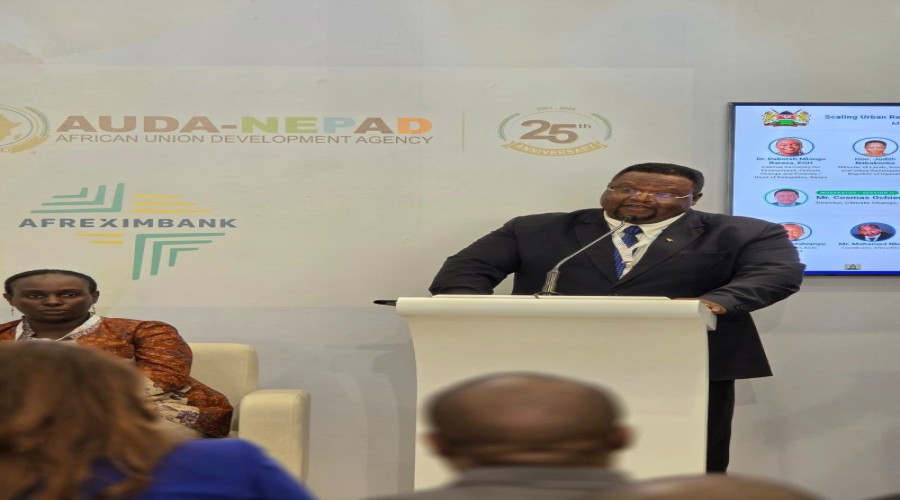
The call was made by Dr
Augustine B. Njamnshi, Co-Founder and Chair of Technical and Political Affairs
at the Pan-African Climate Justice Alliance (PACJA) and Executive Director of
ACSEA, during a high-level side event at COP31 in Antalya, Türkiye.
The event, held at the
Africa Pavilion in the Blue Zone, focused on scaling urban resilience and
developing bankable infrastructure pipelines for Africa's urban poor through
the BCRUP Programme.
Discussions centred on how
African cities can develop investment-ready climate adaptation projects while
ensuring that communities remain active partners in shaping solutions intended
to improve their lives.
Drawing on experiences from
Maputo, Lagos and Dodoma, Dr Njamnshi highlighted that Africa does not lack
climate solutions. Rather, the challenge lies in preparing these solutions for
investment, strengthening partnerships and building trust with communities.
He emphasised the need to
strengthen project preparation and technical capacities to make locally
developed adaptation initiatives investment-ready.
The discussions also
highlighted the importance of involving communities, particularly women, young
people and local organisations, throughout project design and implementation.
Participants further underscored the need to support locally driven innovations,
including nature-based solutions and early warning systems.
Another key issue was the
need to broaden how the bankability of climate adaptation projects is assessed,
taking into account not only financial returns but also social impact,
community ownership and long-term resilience.
ACSEA stressed that climate
adaptation projects must be financially viable, socially relevant and locally
owned to deliver sustainable benefits for African communities.