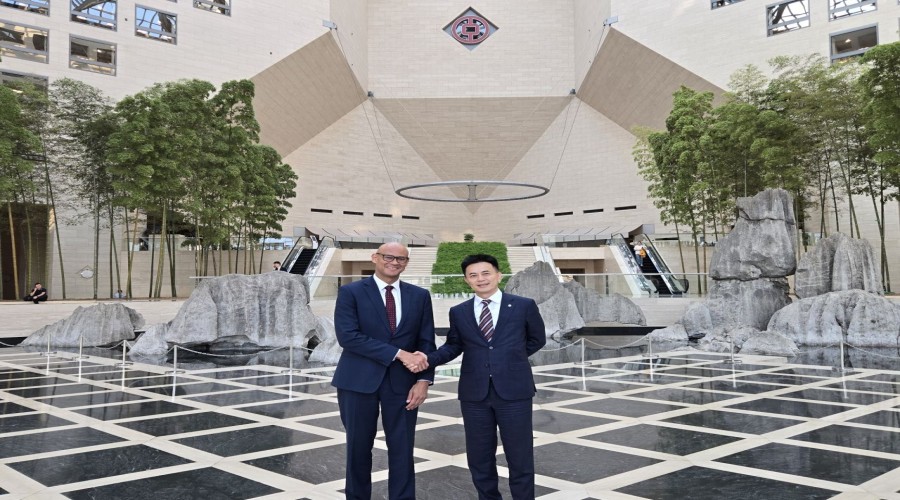
By: Nana
Appiah Acquaye
The United Nations Office
for Outer Space Affairs (UNOOSA) has outlined its work on space situational
awareness, lunar activities, disaster management and international cooperation
during the fourth day of the International Astronautical Congress (IAC) 2026 in
Antalya, Türkiye.
UNOOSA Director Aarti
Holla-Maini updated the international space sector on initiatives led by the
United Nations and the Committee on the Peaceful Uses of Outer Space (COPUOS),
including efforts to improve coordination between satellite operators and strengthen
the responsible use of outer space.
Among the initiatives
highlighted was the Expert Group on Space Situational Awareness, established in
2025, which is working on two recommendations: sharing contact information for
satellite operators and other space situational awareness systems, and exchanging
the minimum information required for collision risk analysis, including
trajectories, ephemeris data and planned manoeuvres.
The group is also
considering a mechanism or platform through which states can discuss best
practices and coordination. To support communication between operators, UNOOSA
developed the UN Satellite Operator Contact Hub, which enables operators to
identify whom to contact in the event of a potential collision risk.
On lunar activities, UNOOSA
outlined three areas of work under COPUOS. These include a draft set of
principles on the legal aspects of space resources, recently circulated by the
chair of the relevant working group for negotiations in 2027; the work of the
Action Team on Lunar Activities (ATLAC) to assess models for future discussions
among states; and the development of expert practices on lunar positioning,
navigation and timing by the International Committee on Global Navigation
Satellite Systems, for which UNOOSA serves as secretariat.
The agency also highlighted
its work supporting disaster management and climate resilience. This includes
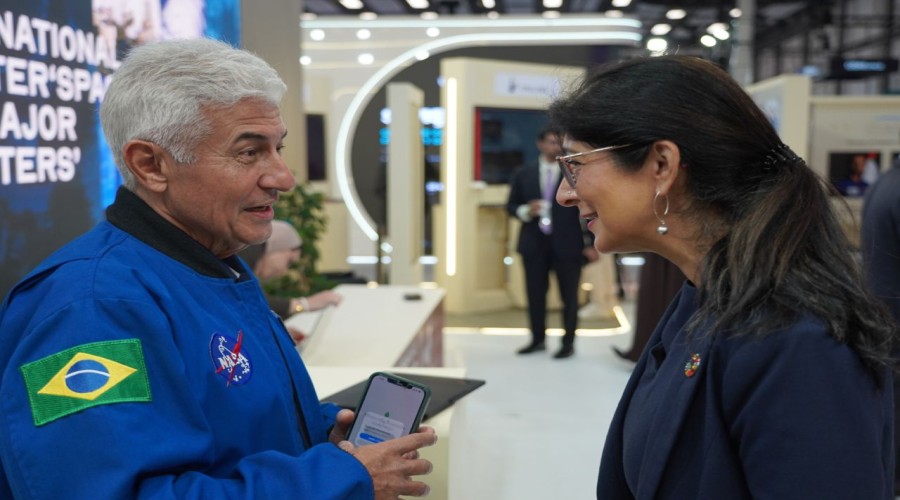
helping states become authorised users of the International Charter: Space and
Major Disasters and bringing digital twin technologies to Commonwealth
countries, including Tonga, Ghana, Trinidad and Tobago, and Brazil.
According to UNOOSA, these
technologies are helping emergency management agencies plan more effectively
and respond faster to disasters.
Holla-Maini also reported
engagements with states seeking to establish space ecosystems and agencies and
accelerate implementation of international space treaties and national space
laws.
A separate meeting with the
U.S. Department of Commerce, U.S. Department of State and Federal Aviation
Administration addressed developments in space situational awareness, the
integration of space activities into airspace frameworks, and efforts to make
COPUOS a stronger and more efficient body for promoting international
cooperation.
UNOOSA also met with the
Japan Aerospace Exploration Agency (JAXA) to discuss the impact of the Access
to Space for All KiboCube programme, which has supported Kenya, Guatemala,
Mauritius and Moldova, as well as an upcoming mission involving El Salvador.
The discussions also covered JAXA-UNOOSA cooperation in the post-International
Space Station era.
In another development at
IAC 2026, UNOOSA and the Mohammed Bin Rashid Space Centre launched a new call
for applications for the third round of the Payload Hosting Initiative (PHI),
which offers teams worldwide an opportunity to send innovative technologies
into orbit.