By: Nana
Appiah Acquaye
Digital Cooperation
Organization (DCO) Secretary-General Deemah AlYahya has called for stronger
global participation in shaping artificial intelligence governance, warning
that the ability to use AI is spreading far more widely than the capacity to
influence how the technology is developed.
AlYahya said the next
leadership of the United Nations should move digital multilateralism from
agreement to implementation while protecting the civilian digital systems on
which societies increasingly depend.
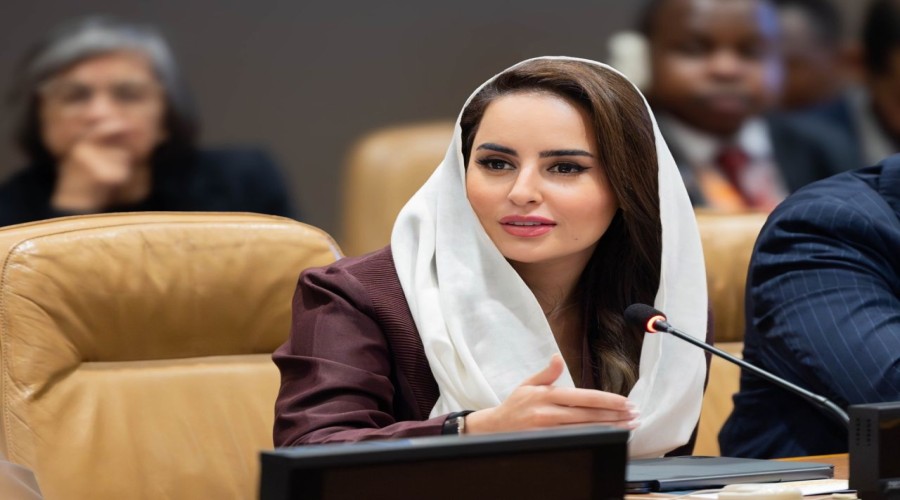
She made the remarks after
participating in the AI Middle Powers Roundtable during the 81st United Nations
General Assembly, where she joined Kenyan President William Samoei Ruto and
Finnish President Alexander Stubb to discuss how middle powers can contribute
to a more secure and inclusive AI future.
According to AlYahya, the
global distribution of AI development remains heavily concentrated. She cited
figures showing that 17 percent of the world produces 87 percent of notable AI
models, while 91 percent of AI venture capital funding goes to high-income
countries. At the same time, more than 40 percent of generative AI traffic
originates from middle-income countries.
The figures, she said,
highlight a widening gap between participation in the use of AI and the ability
to shape its development.
AlYahya argued that
sovereignty in what she described as the intelligence era cannot be achieved
through isolation, but requires agency, partnerships, resilient digital
foundations and meaningful participation in AI governance.
She said the DCO is working
to address these gaps through collective AI governance, stronger national
capabilities and more resilient digital foundations.
The DCO chief also pointed
to the UN General Assembly as an opportunity to ensure that the global reach of
AI is matched by broader participation in decisions about its future.
She said the intelligence
era should ultimately be defined not by which countries or entities control the
greatest amount of technology, but by how widely the opportunities,
capabilities and agency associated with AI are shared.