By: Nana Appiah Acquaye
As the world prepares for
the International Telecommunication Union (ITU) Plenipotentiary Conference in
Doha this November, the election of the next Director of the ITU
Radiocommunication Bureau (ITU-R) is expected to shape the future of global
spectrum management for the next four years.
With demand for radio
spectrum accelerating due to the rapid growth of 5G, emerging 6G technologies,
low Earth orbit (LEO) satellite constellations, artificial intelligence-enabled
networks and expanding digital connectivity, the leadership of the ITU-R has
never been more critical. The Bureau plays a central role in managing the
international radio-frequency spectrum and satellite orbits, ensuring that the
world's increasingly interconnected communications systems operate efficiently
and without harmful interference.
In this exclusive interview
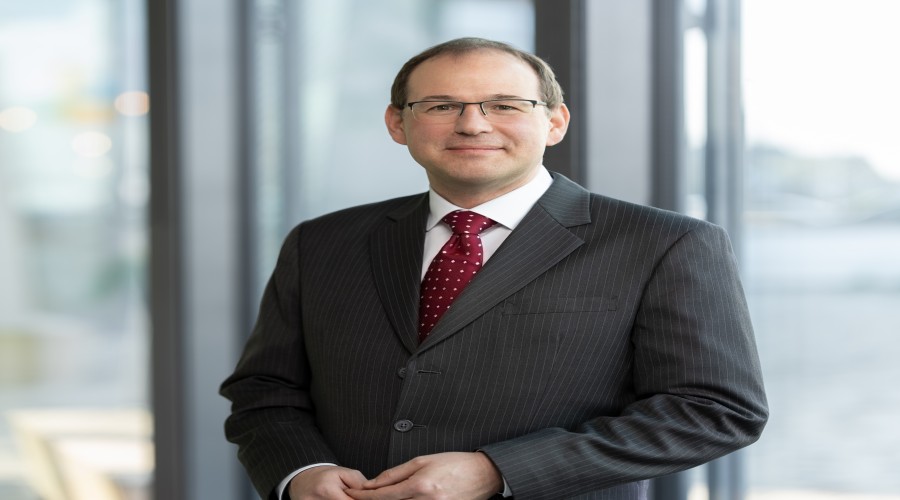
with TechReview Africa, Germany's candidate for Director of the ITU
Radiocommunication Bureau, Alexander Kühn, shares his vision for the
future of global spectrum governance. He discusses the Bureau's role in
maintaining neutrality amid growing geopolitical competition, managing the rise
of satellite mega-constellations, supporting the convergence of terrestrial and
non-terrestrial networks, and ensuring developing countries—particularly those
in Africa—play a greater role in shaping international spectrum policy.
Kühn also outlines how he
intends to strengthen transparency, technical excellence and capacity building
within the ITU-R while positioning the Bureau to respond to the opportunities
and challenges of the next generation of global communications.
TRA: What is your
overarching vision for the ITU Radiocommunication Bureau at a time when
spectrum demand is accelerating across mobile, satellite, and emerging 6G
ecosystems?
AK: My vision is a
strong, technically grounded Radiocommunication Bureau that remains a trusted
and future-oriented institution at the centre of the multilateral system. My
ambition is not only to preserve the Bureau's strengths, but to build on them
and develop it further. As spectrum demand accelerates across mobile networks,
satellite systems and the path toward 6G, the Bureau's task is to keep
decisions anchored in technical evidence. It does not set allocations itself.
Member states do that at the World Radiocommunication Conferences, while the
Bureau supports neutral compatibility and sharing studies and the
administrative framework that let decisions rest on facts rather than
interests. What I stand for is straightforward: technical excellence,
evidence-based decisions, and greater transparency in how World
Radiocommunication Conferences are prepared and conducted.
TRA: What are the
most urgent governance or structural reforms you believe ITU-R must undertake
to remain relevant in a rapidly evolving global communications environment?
AK: For me the most
important reforms are less about structure than about how the Bureau works.
Transparency and sound procedure are governance questions in their own right,
and that is where I would concentrate. In practice it means making procedures
more efficient and keeping every stage of the work evidence-based and
transparent. Chairing the preparation for WRC-27, I see the Bureau's processes
from the inside, and I know where they can be made more agile without losing
rigour. A further priority is people. The Bureau depends on strong, diverse
expert teams, and I want to bring forward a younger generation of professionals
and open clear pathways into leadership, so that it keeps the depth it relies
on.
TRA: How can ITU-R
maintain neutrality and trust in an increasingly geopolitical landscape where
spectrum and orbital resources are becoming strategic assets?
AK: With my
candidacy, I stand as an honest broker in the service of all member states and
regions, never the voice of one bloc or one industry. Neutrality means
grounding decisions in technical evidence rather than political interest. Trust
follows from that, and from consensus understood as a genuine way of working,
not a formality: every perspective deserves to be heard, and differences are
worked through by constructive and respectful dialogue. Beneath all of it sits
one objective I will defend without compromise. Global communication in every
form depends on the absence of harmful interference in the use of the radio
spectrum, and keeping that technical purpose at the centre is what keeps the
Bureau credible when sovereign interests collide. In more formal terms:
defending the application of the Radio Regulations.
TRA: With the rapid
expansion of LEO satellite constellations, what do you see as the most pressing
regulatory and technical challenges that must be addressed globally?
AK: Two principles
enshrined in the ITU Constitution have to hold together here: equitable access
to orbital and spectrum resources, and their rational and efficient use. Both
deserve to be reaffirmed as constellations grow. The concern that large systems
from industrialised countries could exhaust resources before others can deploy
is one, I take seriously and consider legitimate. Part of the answer is
administrative. The Bureau registers satellite filings and executes the
decisions of previous conferences, for instance through the milestone process
that guards against speculative or unused filings. Much of it is also a
question of scalability, meaning at what size a new system becomes economically
viable, and on that there is still room for further systems. On the technical
side, the constant task is managing interference between a growing number of
systems, which again comes back to robust, neutral studies delivered quickly
and transparently. Finally, equitable access in terms of meaningful
connectivity has also a dimension of access to capacity of LEO networks.
TRA: What role
should ITU-R play in supporting the convergence of terrestrial and
non-terrestrial networks, especially as we move toward 6G and AI-driven
connectivity systems?
AK: Convergence is the
defining trend. Direct-to-cell and similar services are a direct consequence of
communication technologies converging, and that convergence is itself a driver
of better sharing opportunities between terrestrial and non-terrestrial
networks. The Bureau's role is to support neutral compatibility and sharing
studies, and to keep the administration of spectrum and satellite resources
agile enough to match the pace of the technology. The framework for satellites
delivering connectivity is best set globally at the WRC, in particular the 2027
conference, with national implementation following, which is where sovereignty
comes in. Change is a constant feature of spectrum management: it creates new
opportunities but also requires existing systems to be re-balanced. As 6G and
AI-driven systems take shape, the same discipline applies: the Bureau keeps
decisions evidence-based and its own processes fit for a faster technological
cycle, while the substantive choices remain with member states. The Bureau may
also benefit from new tools. In all of this, clear communication is key.
Connectivity
& Digital Inclusion (Africa Focus)
TRA: Africa
continues to face persistent spectrum and connectivity gaps. What practical
steps can ITU-R take to accelerate more affordable and inclusive access to
spectrum resources on the continent?
AK: Equitable
access is the guiding principle. It is the basis for participation and economic
development in every region, and it holds for Africa in particular. In
practical terms, I would push capacity building through the exchange of best
practices, because a shared understanding of needs and solutions is what makes
consensus possible and helps administrations get the most from their spectrum.
The interests of smaller and less-resourced administrations must be safeguarded
alongside those of large market players, so that harmonised conditions serve
every member state and not only the most powerful. Fair and predictable
frameworks let coverage bands, satellite and direct-to-device services work
together with terrestrial networks to reach rural and underserved areas at
lower cost. And transparency acts as a bridge between differing national needs.
TRA: How would your
leadership ensure that developing countries are not merely rule-takers but
active contributors in global spectrum standards-setting?
AK: This matters to
me, and it is close to the legacy I would want to leave. An honest broker
serves all member states, which means smaller and less-resourced
administrations have to be genuine participants rather than recipients of
decisions taken elsewhere. I would work on this along two lines. First,
capacity building and the exchange of best practices, so that more
administrations have the technical expertise to shape studies and negotiations
instead of only reacting to them. Second, broadening participation in the
Bureau's work and building a more diverse next generation of radiocommunication
professionals, with clear pathways into leadership.
Above all, I
want a Bureau with open doors – approachable for every administration that
brings a question or an idea, not only for the largest delegations. Transparent
and well-prepared processes help here too: when the evidence and the procedure
are open, a smaller delegation can engage on equal terms. The aim is a Bureau
where every region helps shape the frameworks that will govern it.