By: Nana
Appiah Acquaye
Smart Africa has called for
a stronger African role in shaping the future of artificial intelligence by
focusing on localised AI applications and strengthening control over critical
infrastructure, including energy and computing capacity.
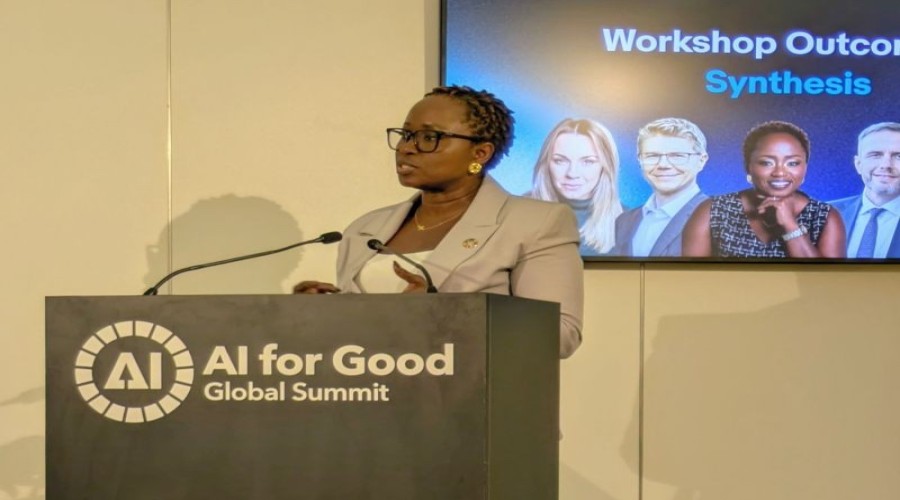
The call was made by Thelma
Quaye, Smart Africa’s Director of Digital Infrastructure, Skills and
Empowerment, during a session titled “Building where compute is scarcest” at
the AI for Good Global Summit in Geneva.
The session, organised by
Access Partnership and Forum Global, examined the question of who controls
frontier artificial intelligence technologies and how countries can achieve
more equitable access to advanced AI capabilities.
Quaye highlighted the
growing importance of reducing dependency on external AI infrastructure, noting
that access to frontier models can be influenced by decisions made outside
Africa.
She argued that African
countries should not view access to advanced AI models as the ultimate goal,
but instead focus on building strengths in areas where the continent has unique
advantages, particularly local context and energy capacity.
According to Quaye, Africa
can drive innovation by developing AI solutions tailored to local needs,
including applications that address challenges in areas such as languages,
agriculture, healthcare and other sectors that may not receive attention from global
AI developers.
She noted that while global
technology companies can also adapt models to local environments, Africa has an
opportunity to move faster by leveraging its deep understanding of its own
markets and communities.
The Smart Africa
representative also stressed the importance of energy infrastructure in
supporting the continent’s AI ambitions, highlighting Africa’s significant
renewable energy potential as a strategic advantage in the global data economy.
She pointed to the
continent’s renewable energy resources and growing digital infrastructure
needs, while noting that challenges such as high financing costs, grid capacity
limitations and investment barriers must be addressed to unlock opportunities.
Quaye said Africa’s future
AI competitiveness will depend on its ability to strengthen both the energy
layer that powers digital infrastructure and the context layer that enables
locally relevant solutions.
She emphasized that building
these capabilities requires collaboration among African governments, the
private sector, investors and global partners to ensure the continent can
participate meaningfully in the evolving AI economy.
The discussions at the AI
for Good Global Summit form part of broader global conversations on ensuring
inclusive access to artificial intelligence and developing responsible AI
ecosystems that benefit societies worldwide.