By: Nana
Appiah Acquaye
Two major initiatives aimed
at improving disability inclusion in artificial intelligence systems have been
launched at the Global Data Festival 2026, marking a significant step toward
addressing data gaps affecting millions of people with disabilities across
Africa.
The Assistive Technologies
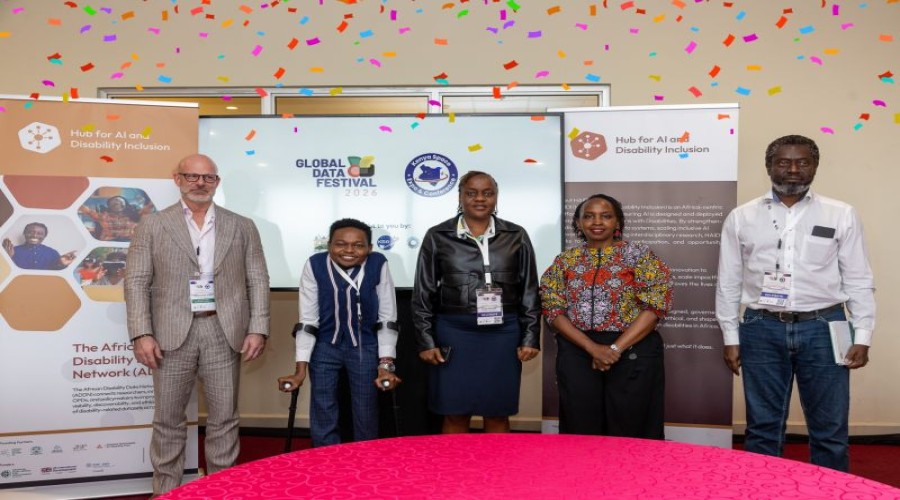
for Disability Trust announced the launch of the Hub for AI and Disability
Inclusion (HAIDI) and the African Disability Data Network (ADDN) during a panel
discussion titled “The Disability Data Desert: Who Is Missing from Africa’s AI
Systems?”
Organisers highlighted that
the absence of comprehensive disability-related data continues to limit the
effectiveness of AI systems used in key sectors such as education, healthcare,
employment, and public service delivery across the continent.
HAIDI is designed as a
continent-wide platform bringing together disability communities, researchers,
innovators, policymakers, and practitioners to advance inclusive artificial
intelligence. The initiative is built around three core pillars: disability-centred
data systems, inclusive AI innovation, and ethical AI governance.
The African Disability Data
Network (ADDN) will serve as a coordination framework to connect institutions
and stakeholders working with disability-related datasets, while strengthening
collaboration, knowledge sharing, and evidence-based policymaking across
Africa.
The initiative also includes
a call for applications targeting inclusive AI developers across the continent,
aimed at supporting innovation in accessibility and disability-focused digital
solutions.
The launch session featured
contributions from experts including Bernard Chiira, Christopher Harrison,
J.D., Ph.D., Lilian D. A. Wanzare, PhD, and Ojenge Winston, PhD, who provided
insights into the challenges and opportunities in building inclusive AI systems.
The programme is supported
by the International Development Research Centre (IDRC), FCDO Services, and
Artificial Intelligence for Development (AI4D), and is being implemented in
partnership with the Responsible AI Lab (RAIL), Next Step Foundation, and the
Maseno Centre for Applied Artificial Intelligence.