Bank of Ghana Governor highlights economic recovery and digital finance push at CEO Summit
Date: 2026-05-29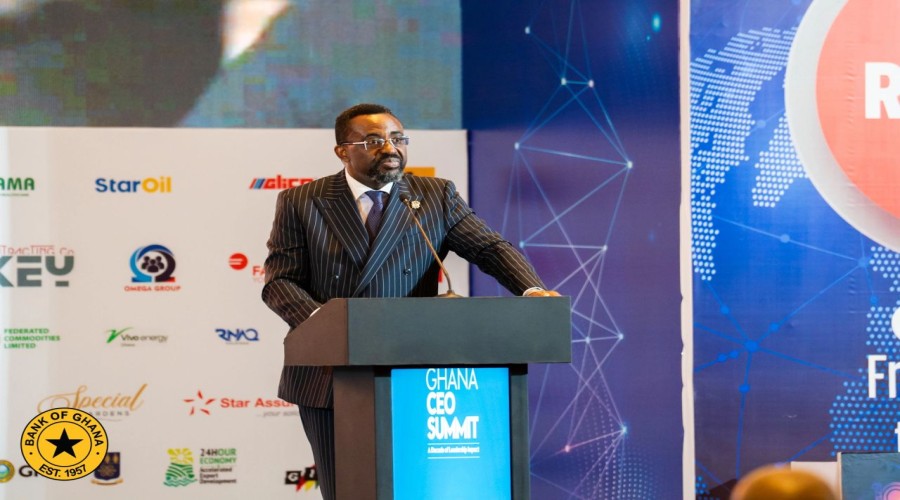
By: Nana Appiah Acquaye
The Governor of the Bank of
Ghana, Dr. Johnson Pandit Asiama, has highlighted Ghana’s recent macroeconomic
recovery and outlined the central bank’s strategic direction for monetary
policy reform, financial supervision, and digital financial innovation.
Speaking at the 10th Ghana
CEO Summit and Expo, Dr. Asiama said Ghana is at a critical economic juncture,
noting that the country’s recovery over the past year has been the result of
disciplined policy implementation and coordinated efforts by key economic
institutions.

He stated that inflation has
moderated significantly, exchange rate conditions have stabilised, and foreign
reserves have strengthened, contributing to renewed confidence in the economy.
According to him, these gains reflect difficult but necessary decisions taken
to restore macroeconomic stability.
Dr. Asiama commended the
organisers of the Ghana CEO Summit for providing a platform for sustained
dialogue between policymakers and business leaders, describing the forum as
essential for shaping forward-looking economic discussions.
He further outlined reforms
underway at the Bank of Ghana, including the development of a more transparent
and forward-looking monetary policy framework and the adoption of a proactive,
risk-sensitive approach to financial sector supervision.

He added that the central
bank is strengthening its capacity in digital finance through the establishment
of dedicated departments focused on fintech, artificial intelligence and data
analytics, as well as virtual assets regulation. He also confirmed that Ghana’s
eCedi central bank digital currency pilot has been successfully completed.
Dr. Asiama emphasised that
digital transformation must be implemented responsibly and inclusively, with
strong governance structures to protect consumers and ensure broad-based
benefits.

He called on business and
corporate leaders to play an active role in sustaining economic stability,
stressing that Ghana’s long-term transformation will depend on collaboration
between institutions, the private sector, and policymakers.
He concluded that building a
more competitive and resilient economy requires disciplined institutions,
innovative enterprises, and shared national commitment.