
Senegal strengthens climate-health response with revitalisation of Fatick Regional Committee
Date: 2026-05-20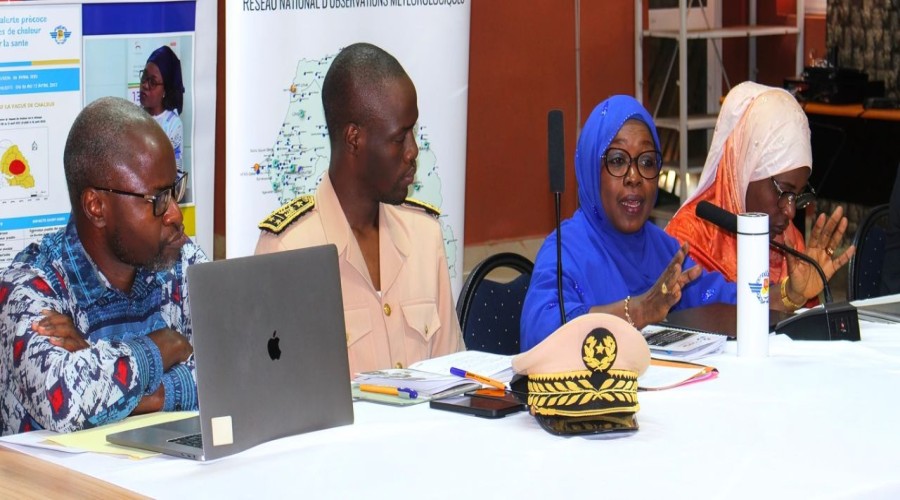
By: Kanto Kai Okanta
The Ecological Monitoring
Center (Centre de Suivi Écologique), in collaboration with the Ministry of
Health and Public Hygiene and ANACIM, has launched a mission to revitalise the
Regional Climate-Health Committee in the Fatick region as part of efforts to
strengthen climate resilience in public health systems.
The initiative forms part of
the Science Support for Action on Climate and Health (SSACH) project and is
being implemented from May 19 to 22, 2026, with a focus on improving the
integration of climate information into health planning and emergency response
mechanisms.

Authorities say the intervention is aimed at enhancing the anticipation and management of climate-related health risks, particularly heat waves, which are becoming increasingly significant due to climate variability and change.
Since its establishment in
2023, the regional climate-health committee has been responsible for producing
“heat wave” bulletins intended to support early warning and response systems.
However, implementation challenges have limited its effectiveness.
These challenges include low
committee engagement, weak coordination among stakeholders, difficulties in
disseminating and applying climate bulletins, and limited incorporation of
climate data into local decision-making processes.

The revitalisation workshop
brings together a broad range of stakeholders, including regional
administrative and health authorities, district medical officers, firefighters,
the Red Cross, community radio representatives and local associations.
At the conclusion of the
workshop, participants are expected to strengthen their understanding of
climate-health information systems and improve their capacity to use early
warning data to protect public health at the community level.
Officials say the renewed
focus on coordination and information use is expected to enhance preparedness
and response to climate-related health risks in the region.